It was after reading The Magus, by John Fowles, sometime in the late ‘60s, that I started thinking about the difference between being and becoming. In the novel, Nicholas, a young Oxford graduate, accepts a post teaching English on a Greek island. On one of his long solitary walks he runs into an older wealthy man who lives alone on his estate. They begin taking walks together and having long talks. I don’t remember much about the plot, but I do remember that on one of these walks, the older man makes the distinction to Nicholas that because he was young, he was busy becoming, while the older man was simply being.
The desire to become something comes from a place of dissatisfaction. I am dissatisfied with who I am and when I become something different, then I will be happy. People who are successful at their jobs, do the work because they love it. That’s where the satisfaction comes from. It does not come from the identification with or status from the role they play. Becoming is always focused on the future, not the present. It is self- conscious and concerned with how others view us. Adults get caught in the realm of becoming because of an underlying feeling that what they are is not enough.
Being is not future oriented but is totally in the present moment. To become a pianist, one has to spend much time in the being mode, practicing the piano. When one finally becomes an accomplished pianist, it is not the role that gives one happiness, but the act of being an instrument for the music. The pianist loses his/her personal identity in the unselfconscious act of playing music.
Young children more easily allow themselves to just “be in the world”. They also can get lost in the desire of becoming, but I assume this is normal for their developing personalities.
I’ve always liked honeybees. I like them because on one long hot summer day when I was a child, I sat in the back yard and watched the bees come and go on the flowering bushes. I had nothing to do and no one to do it with, so I surrendered to a state of being and to my delight, shared that space with the honey-bees. They went about their business deliberately and meticulously. I felt a oneness with the bees and felt joyously alive. After all these years, the sight of honeybees can instantly transport me into the still spaciousness of being.
The mode of becoming dominated my life after puberty and when I entered junior high school. I felt that I wasn’t enough and needed to work harder to become a better athlete, create a better body, become a better conversationalist and a better student etc. In my fantasies I wanted to be cool, adventurous and fearless. All this angst about becoming something different arose out of a discontented place inside me.
In the mode of becoming, we never quite get there. Even when I did succeed in an area, it still wasn’t good enough. We’re only satisfied when we are in the realm of being. When we surrender to being, it absolutely doesn’t matter how good we are at something, and we are not in the least concerned with how we appear to others. Our society is youth oriented. The young people are running around and working hard to become something. Retirement is the perfect time of life to focus on being and give up becoming. We are no longer immersed in the pressures of work and the world in general.
Where we live here in Green Valley, Arizona, there are a lot of bees and birds, and wildlife, and old people, all sharing the spaciousness of being.
Tuesday, May 31, 2011


Wednesday, May 25, 2011
Thanks For the Memories
The other day I was thinking about a couple of people I never got a chance to thank, but would have liked to. One was my 5th grade teacher, Mr. Atkins, and the other was Bob Hope. I narrowly missed an opportunity to thank Mr. Atkins when my friend Paul and I went back to Ferguson in 2002. We walked around the old neighborhood and then over to Lee Hamilton Elementary School which we both attended in the fifties. School had just let out and as soon as the kids left the building, we got a chance to go in and talk to some of the staff. When I asked about Mr. Atkins, the secretary told me he had died recently. She said he spent his whole teaching career at the school and that he had been retired for a number of years.
I don’t remember anything specific Mr. Atkins said to me, except that at a time when I was having trouble in school, he made me feel like I had great potential and could do anything I put my mind to. I was a poor student as a kid and at times, a nervous wreck. In the sixth grade my anxiety about school became so bad my parents took me out of public school and placed me in a private one. But I had no problems in Mr. Atkins’ 5th grade class. When the secretary told us about his recent death, it hit me that sometime during my life I could have at least sent him a letter or a card. He was right there at Lee Hamilton School the whole time, I’m sure helping kids feel better about themselves. I hope some of them made the effort to thank him.
I don’t think Bob Hope needed my thanks. He was arguably the most popular entertainer in the world for many years and he received numerous awards. I know there are and have been thousands of veterans like me who feel immense gratitude toward him. The love and concern he felt for the men and women fighting America’s wars was genuine and it came through in the shows he put on for the troops. He said once that his greatest honor was becoming an honorary veteran.
I recently read one of his autobiographical books called, Don’t Shoot, It’s Only Me. It was about his show business career with the focus on the USO shows for military personnel. It all started in May 1941, when he was asked to take his popular radio show to March Field and perform live for the Army soldiers. He said at first he resisted the idea, but eventually was talked into it. This was before Pearl Harbor and our involvement in WWII. He realized early that these men and women were desperate for familiar sounds and sights from home and what they needed more than anything was to laugh. For that first show, he brought along Ray Milland, but soon realized the men in the audience wanted to see girls. So he started bringing along popular starlets of the time. He states in the book, “We represented everything those new recruits didn’t have: home cooking, mother, and soft roommates.”
From that very first show Hope felt he had been transported to comedy heaven. Even mediocre jokes got big laughs. After one so-so joke he comments, “The laughter was so loud I had to look down to see if my pants had fallen.” After returning to the civilian audiences, “The memory of the generous laughter at March Field haunted me…” He was hooked.
He headlined more than sixty USO tours over a span of fifty years, taking his troop to Europe and all over the Islands of the Pacific during WWII, later to Korea during the war and then to Vietnam. He even did shows for the troops during the first Gulf war. His entourage had many close calls, but this only seemed to make him more determined to continue bringing shows to the fighting men and women. He started calling the soldiers and sailors he entertained, “my kids” even though at the time, he wasn’t much older.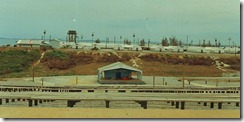
I got the opportunity to see the show in Chu Lai, Vietnam, Christmas of 1967. My buddies and I took a cooler full of beer and drove up Highway 1 to the Americal Division Headquarters outdoor amphitheater. We were pretty far in the back, but the acoustics were good, so we didn’t miss a thing. This 1967 Christmas tour was made into a documentary film and can be viewed on you-tube at http://www.youtube.com/watch?v=SzOsLRT7d5c.
He had four women performers with him that year, Raquel Welch, Barbara McNair, Elaine Dunn and Miss World, who he introduced by saying, “I just wanted you to remember what you’re fighting for.” Also with him was Phil Crosby, one of Bing’s sons. Some of his jokes were about Bing and you could tell how highly he valued their friendship. This was the first overseas show without his lifelong friend, the comedian Jerry Colonna. The music was provided by Les Brown and his Band of Reknown. Bob characterized himself as a big chicken and made jokes about how scared he was when the firing started or the bombs fell. We all laughed uproariously at these jokes not daring to admit to our fellow soldiers that we were all just as scared much of the time.
On that tour, Hope and his troop did shows at 22 bases in 15 days. Some of Bob’s jokes were specific to each area they were in and that included Chu Lai. These were the jokes that got the biggest laughs. At the time, much of the country was against the war and it was hard for us to think about the lack of support at home. For a little while anyway, Bob Hope’s USO show countered all those feelings. They closed the show with Barbara McNair leading us all in the singing of Silent Night. I know there wasn’t a dry eye in the audience.
I consider this show to be one of the highlights of my life. Watching parts of it on you-tube now, my appreciation certainly wasn’t because it was the best entertainment I’d ever seen. The music was mostly from the previous generation. And I didn’t realize at the time that Raquel Welch doesn’t sing or dance very well. She was out performed by Elaine Dunn and Barbara McNair who were great entertainers. But Raquel was probably the biggest hit because she looked so hot in her skimpy blue and white knit mini-dress. I know that’s what I remember most from the show. The guys in the photography section of our Intelligence detachment took pictures of her from all angles, blew them up and made quite a bit of money selling them to other soldiers and sailors. Indeed, she represented what we were all fighting for.
So I wish I could have thanked Bob and Mr. Atkins, two men who made me feel cared about at two very stressful times of my life.
I don’t remember anything specific Mr. Atkins said to me, except that at a time when I was having trouble in school, he made me feel like I had great potential and could do anything I put my mind to. I was a poor student as a kid and at times, a nervous wreck. In the sixth grade my anxiety about school became so bad my parents took me out of public school and placed me in a private one. But I had no problems in Mr. Atkins’ 5th grade class. When the secretary told us about his recent death, it hit me that sometime during my life I could have at least sent him a letter or a card. He was right there at Lee Hamilton School the whole time, I’m sure helping kids feel better about themselves. I hope some of them made the effort to thank him.
I don’t think Bob Hope needed my thanks. He was arguably the most popular entertainer in the world for many years and he received numerous awards. I know there are and have been thousands of veterans like me who feel immense gratitude toward him. The love and concern he felt for the men and women fighting America’s wars was genuine and it came through in the shows he put on for the troops. He said once that his greatest honor was becoming an honorary veteran.
I recently read one of his autobiographical books called, Don’t Shoot, It’s Only Me. It was about his show business career with the focus on the USO shows for military personnel. It all started in May 1941, when he was asked to take his popular radio show to March Field and perform live for the Army soldiers. He said at first he resisted the idea, but eventually was talked into it. This was before Pearl Harbor and our involvement in WWII. He realized early that these men and women were desperate for familiar sounds and sights from home and what they needed more than anything was to laugh. For that first show, he brought along Ray Milland, but soon realized the men in the audience wanted to see girls. So he started bringing along popular starlets of the time. He states in the book, “We represented everything those new recruits didn’t have: home cooking, mother, and soft roommates.”
From that very first show Hope felt he had been transported to comedy heaven. Even mediocre jokes got big laughs. After one so-so joke he comments, “The laughter was so loud I had to look down to see if my pants had fallen.” After returning to the civilian audiences, “The memory of the generous laughter at March Field haunted me…” He was hooked.
He headlined more than sixty USO tours over a span of fifty years, taking his troop to Europe and all over the Islands of the Pacific during WWII, later to Korea during the war and then to Vietnam. He even did shows for the troops during the first Gulf war. His entourage had many close calls, but this only seemed to make him more determined to continue bringing shows to the fighting men and women. He started calling the soldiers and sailors he entertained, “my kids” even though at the time, he wasn’t much older.

I got the opportunity to see the show in Chu Lai, Vietnam, Christmas of 1967. My buddies and I took a cooler full of beer and drove up Highway 1 to the Americal Division Headquarters outdoor amphitheater. We were pretty far in the back, but the acoustics were good, so we didn’t miss a thing. This 1967 Christmas tour was made into a documentary film and can be viewed on you-tube at http://www.youtube.com/watch?v=SzOsLRT7d5c.
He had four women performers with him that year, Raquel Welch, Barbara McNair, Elaine Dunn and Miss World, who he introduced by saying, “I just wanted you to remember what you’re fighting for.” Also with him was Phil Crosby, one of Bing’s sons. Some of his jokes were about Bing and you could tell how highly he valued their friendship. This was the first overseas show without his lifelong friend, the comedian Jerry Colonna. The music was provided by Les Brown and his Band of Reknown. Bob characterized himself as a big chicken and made jokes about how scared he was when the firing started or the bombs fell. We all laughed uproariously at these jokes not daring to admit to our fellow soldiers that we were all just as scared much of the time.
On that tour, Hope and his troop did shows at 22 bases in 15 days. Some of Bob’s jokes were specific to each area they were in and that included Chu Lai. These were the jokes that got the biggest laughs. At the time, much of the country was against the war and it was hard for us to think about the lack of support at home. For a little while anyway, Bob Hope’s USO show countered all those feelings. They closed the show with Barbara McNair leading us all in the singing of Silent Night. I know there wasn’t a dry eye in the audience.
I consider this show to be one of the highlights of my life. Watching parts of it on you-tube now, my appreciation certainly wasn’t because it was the best entertainment I’d ever seen. The music was mostly from the previous generation. And I didn’t realize at the time that Raquel Welch doesn’t sing or dance very well. She was out performed by Elaine Dunn and Barbara McNair who were great entertainers. But Raquel was probably the biggest hit because she looked so hot in her skimpy blue and white knit mini-dress. I know that’s what I remember most from the show. The guys in the photography section of our Intelligence detachment took pictures of her from all angles, blew them up and made quite a bit of money selling them to other soldiers and sailors. Indeed, she represented what we were all fighting for.
So I wish I could have thanked Bob and Mr. Atkins, two men who made me feel cared about at two very stressful times of my life.
Monday, May 16, 2011
Truth or Consequences, a Town or a Game Show?
In the previous blog I mentioned three game shows that I used to watch in the ‘50s with my neighbor, Mrs. Howard. One of them was Truth or Consequences, hosted by Bob Barker. When Katie and I were looking for a place in the southwest in which to relocate after retirement, we spent several nights in a town of the same name, Truth or Consequences, New Mexico. We flew into El Paso, spent a night in Las Cruces and then drove up highway 25. The town was known for its healing hot springs and so fleeing the cold and damp of March on the Olympic Peninsula, it seemed like the perfect place to go.
We stayed at River Bend Hot Springs. It used to be a youth hostel and was less expensive than some of the other resort spas. It is the only resort right on the edge of the Rio Grande. We stayed in a converted mobile home that was comfortable and clean. The mineral hot springs bubbled up into stone tubs previously used as fish bait ponds, with a choice of temperatures, mild, medium or hot. A separate tub was positioned so close to the edge of the embankment that you could spit into the river as you soaked. I, of course, would never do that. Check out the site at, http://www.riverbendhotsprings.com/
Truth of Consequences is an unusual name for a town. The locals told us that they refer to it as “T or C” for short and that indeed it was named after the game show. As Katie and I wandered around town doing our tourist thing and feeling mellow after our hot soak, we stumbled upon Ralph Edwards Park. I remembered Ralph from the TV show This is Your Life, but didn’t connect him with Truth or Consequences. I found out later that he was the originator of the show, which he hosted on the radio from 1940 until 1957 and on television from 1950 until 1954. Bob Barker took over as host in 1956.
In 1950 Ralph wanted to commemorate the shows tenth year anniversary, so a staff member suggested finding a town or city that would be willing to name itself after the show. The tenth anniversary show could then be broadcast from that town. I don’t know what the town council of the perfectly named Hot Springs, New Mexico was thinking, but they decided to do it. And this was at least 15 years before psychedelic drugs were widely used. Maybe soaking in all that mineral water made their brains soft and mushy. So on April 1, 1950 the Truth or Consequences show was broadcast from the newly named town of Truth or Consequences, Mew Mexico and from that day on, this date was christened by the town as Ralph Edwards Day. Every year for the rest of his life, Ralph returned to T or C on the first weekend of May to celebrate what is now called Fiesta.
The actual game of Truth or Consequences was pretty silly. The contestants were asked trivia questions that they could rarely answer. If they got the answer wrong, Beula the Buzzer went off and they had to pay the consequences, which was usually something zany and slightly embarrassing. For example, on one show a man read an account of a WWII airplane dogfight and the woman contestant had to make all the sound effects to accompany the reading. A middle-aged woman attempting to make airplane and gunfire sounds was kind of funny. The audience was laughing at and not with the contestant, not unlike some of the stupid shows that are on today. The show had a softer side though. At times they would reunite contestants with long lost friends or relatives. This is possibly what led to Ralph’s This is Your Life show idea.
Another unexpected find in T or C was a half sized Vietnam Veteran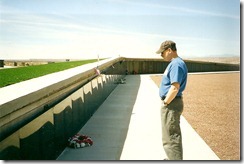 s’ Memorial Wall. It had been a traveling wall until 2002, at which time it was purchased by the state of New Mexico with the help of local T or C businesses. Katie and I spent a little time at the Wall. It was quite emotional for me seeing all those individuals from our time and generation, most of them young, like I was, robbed of their lives by a war that should never have happened in the first place. There are guys I knew up there and I felt lucky not to be one of them, but also guilty that I’m not. They have a nice, simple website for this wall. http://www.torcveteransmemorial.com/
In researching this topic, I ran across a dark chapter in the history of T or C. Five miles outside of town is a small community called Elephant Butte. This is where the “Toy Box Killer” David Parker Ray lived. This guy was a scumbag with a capital SCUM. I quote from Wikipedia,
“David Parker Ray tortured and presumably killed his victims in a $100,000 homemade torture chamber he called his "toy box", which was equipped with what he referred to as his "friends": whips, chains, pulleys, straps, clamps, leg spreader bars, and surgical blades and saws. With these tools it is thought that he terrorized Truth or Consequences for several years with the added assistance of multiple accomplices.”
One of his victims was able to escape and testified in court against him. He was sent to prison for multiple lifetimes, but died of a heart attack shortly after incarceration. It is estimated that he had anywhere from 14-60 victims during that several year period. He perfected a way of cutting open the body so it would sink in water and they never found any bodies as evidence. There’s no indication that the “Toy Box Killer” was a fan of the show, but his gruesome crimes in T or C give new meaning to Ralph Edwards, standard opening line, “Hello, we’ve been waiting for you.”
I would definitely recommend going to Truth or Consequences for a visit and staying at River Bend Hot Springs. But if anyone in town asks you a difficult trivia question, turn and run like hell, the consequences could be ghastly. Mrs. Howard and I were fans of Bob Barker and I prefer the way he ended the show, “Hoping all your consequences are happy ones.”
We stayed at River Bend Hot Springs. It used to be a youth hostel and was less expensive than some of the other resort spas. It is the only resort right on the edge of the Rio Grande. We stayed in a converted mobile home that was comfortable and clean. The mineral hot springs bubbled up into stone tubs previously used as fish bait ponds, with a choice of temperatures, mild, medium or hot. A separate tub was positioned so close to the edge of the embankment that you could spit into the river as you soaked. I, of course, would never do that. Check out the site at, http://www.riverbendhotsprings.com/
Truth of Consequences is an unusual name for a town. The locals told us that they refer to it as “T or C” for short and that indeed it was named after the game show. As Katie and I wandered around town doing our tourist thing and feeling mellow after our hot soak, we stumbled upon Ralph Edwards Park. I remembered Ralph from the TV show This is Your Life, but didn’t connect him with Truth or Consequences. I found out later that he was the originator of the show, which he hosted on the radio from 1940 until 1957 and on television from 1950 until 1954. Bob Barker took over as host in 1956.
In 1950 Ralph wanted to commemorate the shows tenth year anniversary, so a staff member suggested finding a town or city that would be willing to name itself after the show. The tenth anniversary show could then be broadcast from that town. I don’t know what the town council of the perfectly named Hot Springs, New Mexico was thinking, but they decided to do it. And this was at least 15 years before psychedelic drugs were widely used. Maybe soaking in all that mineral water made their brains soft and mushy. So on April 1, 1950 the Truth or Consequences show was broadcast from the newly named town of Truth or Consequences, Mew Mexico and from that day on, this date was christened by the town as Ralph Edwards Day. Every year for the rest of his life, Ralph returned to T or C on the first weekend of May to celebrate what is now called Fiesta.
The actual game of Truth or Consequences was pretty silly. The contestants were asked trivia questions that they could rarely answer. If they got the answer wrong, Beula the Buzzer went off and they had to pay the consequences, which was usually something zany and slightly embarrassing. For example, on one show a man read an account of a WWII airplane dogfight and the woman contestant had to make all the sound effects to accompany the reading. A middle-aged woman attempting to make airplane and gunfire sounds was kind of funny. The audience was laughing at and not with the contestant, not unlike some of the stupid shows that are on today. The show had a softer side though. At times they would reunite contestants with long lost friends or relatives. This is possibly what led to Ralph’s This is Your Life show idea.
Another unexpected find in T or C was a half sized Vietnam Veteran
 s’ Memorial Wall. It had been a traveling wall until 2002, at which time it was purchased by the state of New Mexico with the help of local T or C businesses. Katie and I spent a little time at the Wall. It was quite emotional for me seeing all those individuals from our time and generation, most of them young, like I was, robbed of their lives by a war that should never have happened in the first place. There are guys I knew up there and I felt lucky not to be one of them, but also guilty that I’m not. They have a nice, simple website for this wall. http://www.torcveteransmemorial.com/
 In researching this topic, I ran across a dark chapter in the history of T or C. Five miles outside of town is a small community called Elephant Butte. This is where the “Toy Box Killer” David Parker Ray lived. This guy was a scumbag with a capital SCUM. I quote from Wikipedia,
“David Parker Ray tortured and presumably killed his victims in a $100,000 homemade torture chamber he called his "toy box", which was equipped with what he referred to as his "friends": whips, chains, pulleys, straps, clamps, leg spreader bars, and surgical blades and saws. With these tools it is thought that he terrorized Truth or Consequences for several years with the added assistance of multiple accomplices.”
One of his victims was able to escape and testified in court against him. He was sent to prison for multiple lifetimes, but died of a heart attack shortly after incarceration. It is estimated that he had anywhere from 14-60 victims during that several year period. He perfected a way of cutting open the body so it would sink in water and they never found any bodies as evidence. There’s no indication that the “Toy Box Killer” was a fan of the show, but his gruesome crimes in T or C give new meaning to Ralph Edwards, standard opening line, “Hello, we’ve been waiting for you.”
I would definitely recommend going to Truth or Consequences for a visit and staying at River Bend Hot Springs. But if anyone in town asks you a difficult trivia question, turn and run like hell, the consequences could be ghastly. Mrs. Howard and I were fans of Bob Barker and I prefer the way he ended the show, “Hoping all your consequences are happy ones.”
Tuesday, May 10, 2011
The Path of Love
.jpg)

When I was 3 years old my dad found a puppy wandering alone on the railroad tracks and brought her home. It was around Christmas time, so he gave her to me on Christmas Eve as a present. I named her Cookie. She was my constant companion during the day and slept at the foot of my bed every night. She was loyal and taught me about unconditional love. As a young boy I remember lying in bed at night, Cookie pressed against my leg and crying because I realized she would die before me.
Growing up I lived as though my life would always safely contain my mom, dad, sister and Cookie. We lived in the same house in Ferguson, Mo. from 1953 until 1965. From my perspective now, that doesn’t seem like a very long time. But those were my formative years and so for the rest of my life that house on Moundale Drive will always feel like my true home. Next door were the Howards, an elderly couple who never had children. When mom started working and I was in elementary school, Mrs. Howard took care of Cookie and me if I were sick or there was no school for some reason. I loved my time with her. We developed a routine together. We watched television in the morning, three game shows in a row: The Price is Right with Bill Cullen, Truth or.jpg) Consequences with Bob Barker and Tic Tac Dough with Gene Rayburn. For lunch we often had chicken noodle or tomato soup and Braunschweiger on saltine crackers. She made her special sauce of catsup, mayonnaise and I don’t know what else, to spread on the Braunschweiger. I always raved about it. She also had special treats for Cookie. I was the child she never had and I came with a nice little dog.
Consequences with Bob Barker and Tic Tac Dough with Gene Rayburn. For lunch we often had chicken noodle or tomato soup and Braunschweiger on saltine crackers. She made her special sauce of catsup, mayonnaise and I don’t know what else, to spread on the Braunschweiger. I always raved about it. She also had special treats for Cookie. I was the child she never had and I came with a nice little dog.
Missouri has crappy weather much of the year, but as a boy it didn’t phase me. I loved being outside any time of the year, riding my bike, exploring Moline Creek or just tromping around. My friends and I went to January-Wabash Park to swim in the public pool in the summer and ice-skate on the lake in the winter. And on the fourth of July, they put on a big fireworks display. My friend, Paul, lived nearby and he was always eager to do something together. It’s not easy being a kid and I had my struggles, but in general life was good and full of love and support.
By the time I got out of the Army, everything had changed. Cookie died while I was in Vietnam. My mom didn’t tell me until I returned home. She felt I had had enough grief in the war and didn’t want to add to it. My heart had closed down in Vietnam for survival purposes. I had witnessed too much cruelty, death and suffering. I remember thinking when she told me about Cookie’s death, You think I’m going to get upset about a dog dying, after what I’ve been through. I had no feelings at the time, even though my lifelong loyal companion was gone. My parents moved to Kentucky and so whenever I visited them, it was in a strange city where I didn’t know a soul. The Howards had moved back to Decatur, Illinois. I never saw Mrs. Howard again. Sometime in the 80’s I got a letter from Mr. Howard telling me she had died. He had enclosed a photograph of her headstone. Paul was away at college and we could only see each other rarely. The life I counted on for those 12 years was gone.
But I carried the essence of my childhood with me as my life unfolded. I had internalized those values learned in the ‘50s growing up in Ferguson. I had other pets, each one unique, and each one responding to the love and loyalty that Cookie taught me. I knew how to give and receive love in a family, because I learned that from my parents and my sister. I also knew how to be a supportive loyal friend, because of my lifelong relationship with Paul. 
.jpg)
Missouri has crappy weather much of the year, but as a boy it didn’t phase me. I loved being outside any time of the year, riding my bike, exploring Moline Creek or just tromping around. My friends and I went to January-Wabash Park to swim in the public pool in the summer and ice-skate on the lake in the winter. And on the fourth of July, they put on a big fireworks display. My friend, Paul, lived nearby and he was always eager to do something together. It’s not easy being a kid and I had my struggles, but in general life was good and full of love and support.
By the time I got out of the Army, everything had changed. Cookie died while I was in Vietnam. My mom didn’t tell me until I returned home. She felt I had had enough grief in the war and didn’t want to add to it. My heart had closed down in Vietnam for survival purposes. I had witnessed too much cruelty, death and suffering. I remember thinking when she told me about Cookie’s death, You think I’m going to get upset about a dog dying, after what I’ve been through. I had no feelings at the time, even though my lifelong loyal companion was gone. My parents moved to Kentucky and so whenever I visited them, it was in a strange city where I didn’t know a soul. The Howards had moved back to Decatur, Illinois. I never saw Mrs. Howard again. Sometime in the 80’s I got a letter from Mr. Howard telling me she had died. He had enclosed a photograph of her headstone. Paul was away at college and we could only see each other rarely. The life I counted on for those 12 years was gone.

It took me two tries to find the right partner, but practice makes perfect. When I met Katie I knew right away that she was the one. There is nothing better than sharing your life with a person to whom you give your heart completely. .jpg)
.jpg)
When our son Ben was born, my heart was ripped wide open. When he died at age 28, I would have given my life in exchange for his without a moment’s hesitation.


My path is the path of love. Love is the purest and most satisfying of human emotions and sometimes it hurts like hell.
Tuesday, April 26, 2011
Another Mission Accomplished
I’ve ridden on 4 Patriot Guard missions so far, two were funerals and two were “welcome home’s”. My second mission was the funeral of a young man who completed 2 tours in the Middle-East, got out of the Marines, finished his training to become a Border Patrol Officer and then died in a motorcycle accident. We provided a flag line at the entrance of the funeral home and another one at the gravesite in the cemetery. There were many young people at this funeral. A few looked like the deceased Marine’s service buddies. I could only imagine what they had been through together. Most of the mourners were probably his family and friends from Tucson.
We did a lot of standing around holding our flags in the hot sun on this mission. Out at the cemetery, it was at least 45 minutes before the mourners showed up from the funeral. I got acquainted with the guy standing across the gravel road from me. He is also a Vietnam Vet and is in a long fight with the VA attempting to get a disability for Post Traumatic Stress disorder. While standing there, suddenly two large hawks collided in the sky above us and clutching each other, spiraled down to the ground and landed in the field not far from the gravesite. I’ve never seen hawks fight before and I braced myself for the feathers to start flying. Then one of the guys down the line exclaimed, “They’re not fighting, they’re doing it.” I couldn’t make out exactly what they were doing, but he was right, they were doing “it”. The fluttering mass of feathers lasted a long time and I felt like a voyeur. Then all of a sudden the two individual birds rose up and flew off in different directions. As we watched them become small specks in the sky, somebody said, “What, no small talk, no cigarette?” We were thankful for the diversion from our standing in the hot sun.
As the cars began entering the cemetery, the Ride Captain announced, “They’re here”, and walked down the line of the flag holders. As he did he looked us over and said, “I’d ask you men to suck ‘em in, but I realize that’s as far as they go.” Sad but true, our average age is probably somewhere in the mid-sixties. Marines in dress blues gave this young Marine a 21-gun salute and then played taps. It was very moving.
Last Friday, the mission was to welcome home two Marines from Afghanistan at the Tucson airport. These welcome home missions are emotional as well, but different emotions. Up until this mission, I didn’t have any identifying patches of paraphernalia to wear. The other guys have vests, jackets, hats and or dew rags with patches and pins all over them. For the first 3 missions, I just stood there in my regular clothes feeling rather plain. So a week ago I ordered some Patriot Guard stuff from a website. I got a hat, a tee-shirt, and a sew-on patch for my jacket. When we met up at the American Legion before the mission, the first thing Sam, the President, and Ride Captain said to me was, “You got the wrong color hat.” It was a green Patriot Guard hat and I was supposed to have a blue one. I didn’t realize that color mattered. I made some excuse like, “It didn’t say anything about it on the website.” and Sam replied, “Yes it did, you just didn’t read it.” I thought the green was a really good color for me. I’m glad I didn’t pick maroon, only Ride Captains wear that color. He didn’t say anything about my new Patriot Guard tee-shirt, so I assumed it was alright.
I definitely needed to get more patches sewn on my jacket, so I decided to study what the other guys had on theirs. When we met up with the Tucson riders at the filing station near the airport, I discreetly checked out their jackets and vests. Except for a few guys who wore a simple shirt with a logo, most everyone else wore leather or blue jean vests with patches and buttons on them. Some were so full, it was hard to focus on individual ones. There were Patriot Guard patches, patches identifying their branch of service, American Legion or VFW Post patches, Vietnam Veteran patches and American flag patches. There were a few patches that I thought were wrong and triggered doubts as to whether I really belonged with this group. For example, one guy had a patch that said, “All I need to know about Muslims, I learned on 9/11.” It reminded me of an old guy in my Veteran support group who every now and then blurted out, “I say kill all those rag heads and let God sort ‘em out.” How do you respond to that kind of comment? I noticed one of the Ride Captains had a confederate flag patch next to his American Rifle Association patch. I was beginning to feel more and more like an underground liberal.
At the airport we rode our bikes right up to the main entrance and the security guy let us park in twos right there along the front. We set up a flag line inside the airport where the passengers are met. I had greeted my sister at that very spot just a few weeks before. The Marine’s plane was late, so again there was a lot of standing around and waiting. At least it was air-conditioned. I was talking to the guy standing next to me and inadvertently loosened my grip on my flag and the tip was touching the ground. All of a sudden a woman across from me yelled out, “Get that flag up off the ground. My husband died defending that flag!” Everyone looked at me and I quickly lifted the flag up and shot her a bewildered and somewhat hostile look.
Her commanding outburst brought up all sorts of feelings. My first thought was, why do I want to hang out with these right wing assholes? But I didn’t want to dwell on it or have it get the best of me, so after I calmed down, I decided to talk to the woman who yelled at me. I went over and asked her about her husband. She said he had been a Marine and was killed in Danang in 1970. I told her I was stationed not far from Danang and that I went on R&R with a bunch of Marines from Danang. She seemed surprised to learn that I was in Vietnam. I suppose I didn’t have on enough identifying patches and buttons. She had on a vest covered with them and one of them represented her late husband’s unit, a Marine recon unit. When she told me about him, she teared-up and then apologized for yelling at me about the flag.
Finally the two marines came down the hall and everyone burst into cheers. They were a young woman and man, possibly married. They thanked all of us flag holders as they walked by and I noticed the young woman Marine had tears in her eyes. They were clearly grateful and moved by the reception. After they passed by, we quickly rolled up our flags and exited. Sam said we needed to remove our bikes from the front of the Airport as soon as possible. We stashed our flags in the back of the truck, hopped on our bikes and took off. As they say in the Patriot Guard, “Another Mission accomplished”. Maybe I like being part of this group after all.
We did a lot of standing around holding our flags in the hot sun on this mission. Out at the cemetery, it was at least 45 minutes before the mourners showed up from the funeral. I got acquainted with the guy standing across the gravel road from me. He is also a Vietnam Vet and is in a long fight with the VA attempting to get a disability for Post Traumatic Stress disorder. While standing there, suddenly two large hawks collided in the sky above us and clutching each other, spiraled down to the ground and landed in the field not far from the gravesite. I’ve never seen hawks fight before and I braced myself for the feathers to start flying. Then one of the guys down the line exclaimed, “They’re not fighting, they’re doing it.” I couldn’t make out exactly what they were doing, but he was right, they were doing “it”. The fluttering mass of feathers lasted a long time and I felt like a voyeur. Then all of a sudden the two individual birds rose up and flew off in different directions. As we watched them become small specks in the sky, somebody said, “What, no small talk, no cigarette?” We were thankful for the diversion from our standing in the hot sun.
As the cars began entering the cemetery, the Ride Captain announced, “They’re here”, and walked down the line of the flag holders. As he did he looked us over and said, “I’d ask you men to suck ‘em in, but I realize that’s as far as they go.” Sad but true, our average age is probably somewhere in the mid-sixties. Marines in dress blues gave this young Marine a 21-gun salute and then played taps. It was very moving.
Last Friday, the mission was to welcome home two Marines from Afghanistan at the Tucson airport. These welcome home missions are emotional as well, but different emotions. Up until this mission, I didn’t have any identifying patches of paraphernalia to wear. The other guys have vests, jackets, hats and or dew rags with patches and pins all over them. For the first 3 missions, I just stood there in my regular clothes feeling rather plain. So a week ago I ordered some Patriot Guard stuff from a website. I got a hat, a tee-shirt, and a sew-on patch for my jacket. When we met up at the American Legion before the mission, the first thing Sam, the President, and Ride Captain said to me was, “You got the wrong color hat.” It was a green Patriot Guard hat and I was supposed to have a blue one. I didn’t realize that color mattered. I made some excuse like, “It didn’t say anything about it on the website.” and Sam replied, “Yes it did, you just didn’t read it.” I thought the green was a really good color for me. I’m glad I didn’t pick maroon, only Ride Captains wear that color. He didn’t say anything about my new Patriot Guard tee-shirt, so I assumed it was alright.
I definitely needed to get more patches sewn on my jacket, so I decided to study what the other guys had on theirs. When we met up with the Tucson riders at the filing station near the airport, I discreetly checked out their jackets and vests. Except for a few guys who wore a simple shirt with a logo, most everyone else wore leather or blue jean vests with patches and buttons on them. Some were so full, it was hard to focus on individual ones. There were Patriot Guard patches, patches identifying their branch of service, American Legion or VFW Post patches, Vietnam Veteran patches and American flag patches. There were a few patches that I thought were wrong and triggered doubts as to whether I really belonged with this group. For example, one guy had a patch that said, “All I need to know about Muslims, I learned on 9/11.” It reminded me of an old guy in my Veteran support group who every now and then blurted out, “I say kill all those rag heads and let God sort ‘em out.” How do you respond to that kind of comment? I noticed one of the Ride Captains had a confederate flag patch next to his American Rifle Association patch. I was beginning to feel more and more like an underground liberal.
At the airport we rode our bikes right up to the main entrance and the security guy let us park in twos right there along the front. We set up a flag line inside the airport where the passengers are met. I had greeted my sister at that very spot just a few weeks before. The Marine’s plane was late, so again there was a lot of standing around and waiting. At least it was air-conditioned. I was talking to the guy standing next to me and inadvertently loosened my grip on my flag and the tip was touching the ground. All of a sudden a woman across from me yelled out, “Get that flag up off the ground. My husband died defending that flag!” Everyone looked at me and I quickly lifted the flag up and shot her a bewildered and somewhat hostile look.
Her commanding outburst brought up all sorts of feelings. My first thought was, why do I want to hang out with these right wing assholes? But I didn’t want to dwell on it or have it get the best of me, so after I calmed down, I decided to talk to the woman who yelled at me. I went over and asked her about her husband. She said he had been a Marine and was killed in Danang in 1970. I told her I was stationed not far from Danang and that I went on R&R with a bunch of Marines from Danang. She seemed surprised to learn that I was in Vietnam. I suppose I didn’t have on enough identifying patches and buttons. She had on a vest covered with them and one of them represented her late husband’s unit, a Marine recon unit. When she told me about him, she teared-up and then apologized for yelling at me about the flag.
Finally the two marines came down the hall and everyone burst into cheers. They were a young woman and man, possibly married. They thanked all of us flag holders as they walked by and I noticed the young woman Marine had tears in her eyes. They were clearly grateful and moved by the reception. After they passed by, we quickly rolled up our flags and exited. Sam said we needed to remove our bikes from the front of the Airport as soon as possible. We stashed our flags in the back of the truck, hopped on our bikes and took off. As they say in the Patriot Guard, “Another Mission accomplished”. Maybe I like being part of this group after all.
Thursday, April 21, 2011
A Sunshine Cake Moment
The last five years of my counseling career, I facilitated a therapy group of combat veterans. The members were all Vietnam veterans with the exception of two Korean War vets. These two men were older, one in his 70’s and the other over 80, were both Marines and always sat together. The older man, I’ll call Jack, was born in France. At the age of thirteen, he and his mother fled Nazi occupation. He joined the American Merchant Marines and sailed back over to Europe, transporting material in the war effort and witnessing much death and destruction. After leaving service in the Merchant marines, still a young man, he joined the Marine Corps and was sent to fight in the Korean War. I’ve worked with many veterans over the years and Jack, hands down, experienced more threatening and dangerous situations and did more actual fighting than any veteran I’ve ever worked with.
He was a gentle, sensitive man who empathized with others. He had an open heart and often became tearful when group members talked about their experiences. He often said that the Marines turned him into a “killer monkey” and even though he wasn’t suicidal, he welcomed death because it would finally give him piece.
One day in group he referred to an experience shared by another group member as a “Sunshine Cake Moment”. None of us knew what that was, so I asked him to explain and he told the following story. When the Chinese communists entered the war, Jack was with his unit in the northern part of South Korea. At that time in the war, waves of Chinese soldiers were pouring over the border to aid the North Koreans. The battle was intense, non-stop and lasted for days. Finally after a horrendous night of fighting, the battle over, there were hundreds of dead bodies strewn all over the hills. It was early morning and Jack was in his foxhole. He discovered a few bits of food rations and put together a little desert the soldiers called a sunshine cake. It was the most delicious thing he had ever tasted. He had survived the long battle and felt more alive than ever. He described a sense of peace that transcended his life circumstances. He had no past and no future, only the warm sun, the cool air and the delicious sunshine cake.
The other group members related to his story. Some told similar stories, none quite so dramatic, but all having the same theme, an extreme sense of peace and heightened awareness in the present moment. I thought of a time in basic training at Fort Leonard Wood. It was the middle of winter in the Ozarks and we were out for the day of training. They marched us everywhere for miles and miles and I remember feeling exhausted most of the time. On one particular day, after marching for hours, we came to an open field. Our packs and rifles were heavy, my shoulders and feet hurt, and my legs were tired. The Drill Sergeant stopped the column in the middle of the dirt road and yelled, “fall out, smoke em if you got em and go ahead and suck on your canteens.” We all knew we would be able to rest for a short while.
Each of us found a place in the field. Some guys lay down on their backs, resting their heads on their packs. I sat on mine. Removing my boots, my body relaxed from the day’s activities and weeks of deprivation and abuse. I remember the warm feeling of the sun and the smell of dry grass. The sky was deep blue with a few puffy clouds and the winter air was clean and cool. I was at peace and totally free. It was a “sunshine cake moment”.
He was a gentle, sensitive man who empathized with others. He had an open heart and often became tearful when group members talked about their experiences. He often said that the Marines turned him into a “killer monkey” and even though he wasn’t suicidal, he welcomed death because it would finally give him piece.
One day in group he referred to an experience shared by another group member as a “Sunshine Cake Moment”. None of us knew what that was, so I asked him to explain and he told the following story. When the Chinese communists entered the war, Jack was with his unit in the northern part of South Korea. At that time in the war, waves of Chinese soldiers were pouring over the border to aid the North Koreans. The battle was intense, non-stop and lasted for days. Finally after a horrendous night of fighting, the battle over, there were hundreds of dead bodies strewn all over the hills. It was early morning and Jack was in his foxhole. He discovered a few bits of food rations and put together a little desert the soldiers called a sunshine cake. It was the most delicious thing he had ever tasted. He had survived the long battle and felt more alive than ever. He described a sense of peace that transcended his life circumstances. He had no past and no future, only the warm sun, the cool air and the delicious sunshine cake.
The other group members related to his story. Some told similar stories, none quite so dramatic, but all having the same theme, an extreme sense of peace and heightened awareness in the present moment. I thought of a time in basic training at Fort Leonard Wood. It was the middle of winter in the Ozarks and we were out for the day of training. They marched us everywhere for miles and miles and I remember feeling exhausted most of the time. On one particular day, after marching for hours, we came to an open field. Our packs and rifles were heavy, my shoulders and feet hurt, and my legs were tired. The Drill Sergeant stopped the column in the middle of the dirt road and yelled, “fall out, smoke em if you got em and go ahead and suck on your canteens.” We all knew we would be able to rest for a short while.
Each of us found a place in the field. Some guys lay down on their backs, resting their heads on their packs. I sat on mine. Removing my boots, my body relaxed from the day’s activities and weeks of deprivation and abuse. I remember the warm feeling of the sun and the smell of dry grass. The sky was deep blue with a few puffy clouds and the winter air was clean and cool. I was at peace and totally free. It was a “sunshine cake moment”.
Wednesday, April 13, 2011
In Search of “The Thing?”
During spring break, my step son and his family came down from Seattle to visit us. Fleeing the cold, damp weather of the Northwest, they reveled in the sun. Our seven-year- old grandson happily wandered up and down the sidewalk outside our condo, singing to himself and occasionally kicking a rock. The whole family went to the pool everyday, fitting it around our various trips and activities.
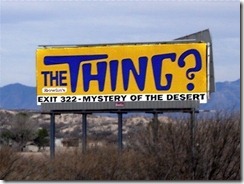 We went hiking in the Chiricahua National Monument, a park in one of the most beautiful and unusual mountain ranges in southern Arizona. On the drive over to the eastern side of the state on Interstate 10, somewhere between Benson and Willcox, we began seeing signs that posed the question, “The Thing, What is it?”. We could find out the answer, we were instructed, by getting off at Exit 322. We had no plans of doing this, because we all knew these signs were a come-on gimmick for some cheesey souvenir shop and that “The Thing?” more than likely was a disappointing artifact that served as a hook to draw people in to shop and eat. As we flew past Exit 322, I noticed a group of buildings including a service station and a Dairy Queen. The main building sported a sign in giant letters, “THE THING?”.
Once in the Chiricahuas we hiked the Echo Canyon Loop on a well maintained path, a total of about 3 miles. It led us through amazing rock formations called hoodoos,which appeared to be stacked by a kindergarten class of giants. The grandkids had fun identifying various animals in the rock shapes. During the hike, my eleven-year-old grandson and I began wondering about “The Thing?”. He thought it might be just the name of the souvenir shop, but I felt certain there was an unusual artifact inside that they were calling “The Thing?”. We talked about the possibility of a two-headed animal, or maybe a mummified creature from the past. The more we talked, the more we knew we had to stop on the way home to satisfy our curiosity. We were traveling in two cars, so after the long day of hiking and driving, it was sort of a big deal to have to stop. I suggested that if “The Thing” was really lame, at least we could get an ice cream at the Dairy Queen next door.
I thought about all those times back in the’50s on family vacations, when on a whim, my Dad would take a detour to see a giant ball of twine or a vortex where things rolled uphill or a giant statue of Paul Bunyan and his blue ox Babe. When my two step sons were young and then later with our son, Ben, we used to love to visit Ye Olde Curiosity Shop down on the wharf in Seattle. It was and still is a bazaar museum with shrunken heads, mummified creatures and fleas dressed in clothes that you view through a magnifying glass. Right next door is an Ivar’s Fish and Chips restaurant . We ate our clam strips and chips while sitting under heat lamps, watching ferries sail in from the Islands on Puget Sound. Wanting my grandchildren to have memories like these, I pushed to stop and check out “The Thing?”.
The gift shop was neat, clean and orderly, and even though the merchandise was mostly a bunch of cheap, fake looking tourist stuff, all members of my family seemed to find something interesting to look at. The seven-year-old bought a bag of polished rocks, enjoying picking out each stone with great care and the older grandson bought a small canteen in a fake leather pouch with a picture of an Indian in full head dress. He happily filled the canteen with water, slung the strap over his shoulder and carried it around on other adventures throughout the week.

The door to “The Thing?” was in the back of the shop. The admission was $1.00 for adults and $.75 for children. We paid the lady at the counter who told us “The Thing?” was in the third building, “Just follow the big yellow foot prints.” The first building contained a variety of extremely dusty artifacts from the past, including a few cars and tractors in ill repair, some buggies and a covered wagon. One of the cars was a 1937 Rolls Royce with a sign saying Adolf Hitler MAY have previously owned it. I had my doubts. Several mannequins were inside the car and sure enough, there in the back seat with his signature tiny mustache, Adolph Hitler sat slumped against the window. Further along was a section of cages filled with wooden dummies in various positions of agony brought on by ancient torture devices. I didn’t get a close look at this exhibit because our daughter-in-law made sure we all passed through this section quickly.
In the second building on either side of the walkway, were smaller antique artifacts behind glass. The old rifles from the 17th and 18th century were mildly interesting. One display sign announced an old and modern telephone. The old telephone was one of those big wooden boxes with the mouth piece sticking out front, a crank handle on the side and the ear piece hanging on a hook on the other side, the kind the Waltons used on TV. The “modern phone” was a black rotary dial phone that looked like it was from the early fifties. To my grandsons, this was an exhibit of two old phones. I had to ask myself, how much time and trouble would it have taken someone to remove the rotary phone and chuck in a used cell phone?
In the third building was a glass topped casket containing a dirty, fake looking mummy. There were other old dirty artifacts in this building and after a few moments of confusion, we assumed the mummy must be “The Thing?”, but we weren’t sure. When we re-entered the gift shop, I asked the woman at the counter if the mummy was “The Thing?”. She and a few others shushed me, I guess my voice was too loud and god forbid if the big secret got out. She softly replied, “yes, the mummy was it”.
There are huge gross signs all along the highway asking the traveler to ponder “The Thing, What is it?” so I had to ask her, “After all the hype, why isn’t there a sign that identifies ‘The Thing?’.” She answered in a matter of fact way, “ Someone stole it and they haven’t been able to find it yet.” I had a number of comments and acute observations to share with this woman, but my wife, Katie, nudged me, which I took to mean, “Leave it alone.”
With the exception of the person who stole the sign, it is obvious to all weary and curious travelers that the museum hadn’t been touched in decades. I researched the origins of “The Thing?” and found out that it was originally owned by Thomas Brinkley Pierce, a Phoenix lawyer. In an NPR piece about it, Rene Gutel interviews a distant relative of Homer Tate, who was also from Phoenix and made gaffes(weird creatures and artifacts) for circus side shows. It is suggested in the interview that Homer was the original creator of “The Thing?”. Pierce first displayed it as a roadside attraction on highway 91 between Barstow and Bakersfield. After he died in 1969, it was purchased by Charles Bowlin, who owned a string of travel centers in New Mexico and Arizona. Bowlin Inc. has been a family business since Claude Bowlin began trading with the Indians of New Mexico in 1912. Charles died in 1972 and the Bowlin Travel Centers are now run by his son Michael L. Bowlin. It says on the web site:
“Our company shall always strive to maintain the pride and tradition started many years ago - carrying first-rate merchandise and offering first-rate service to the traveling public. Our mission statement says it all, ‘Bowlin Travel Centers shall continue to grow and serve our customers in our long standing tradition of honesty, integrity, and hospitality by providing high quality products and services at competitive prices, while providing financial stability and a reasonable return on equity for our stockholders, and compensation in excess of market along with a satisfying work environment for our employees’.”
So here is a message to Mr. Bowlin, who undoubtedly reads my blog: It sounds like your company is growing and making lots of money for you and your stockholders by selling your “first-rate” and “high quality” merchandise. But when you say you take pride in your travel centers, perhaps you weren’t thinking about “The Thing?" museum on Highway 10 between Benson and Willcox. I think you need to come over and take a look. When you come, be sure to bring a dust cloth and a spare cell phone. And while you’re here you might want to push Hitler up out of his slump. And oh yeah, bring along a piece of cardboard and a magic marker, it seems someone stole one of your small but important signs.
 We went hiking in the Chiricahua National Monument, a park in one of the most beautiful and unusual mountain ranges in southern Arizona. On the drive over to the eastern side of the state on Interstate 10, somewhere between Benson and Willcox, we began seeing signs that posed the question, “The Thing, What is it?”. We could find out the answer, we were instructed, by getting off at Exit 322. We had no plans of doing this, because we all knew these signs were a come-on gimmick for some cheesey souvenir shop and that “The Thing?” more than likely was a disappointing artifact that served as a hook to draw people in to shop and eat. As we flew past Exit 322, I noticed a group of buildings including a service station and a Dairy Queen. The main building sported a sign in giant letters, “THE THING?”.
 Once in the Chiricahuas we hiked the Echo Canyon Loop on a well maintained path, a total of about 3 miles. It led us through amazing rock formations called hoodoos,which appeared to be stacked by a kindergarten class of giants. The grandkids had fun identifying various animals in the rock shapes. During the hike, my eleven-year-old grandson and I began wondering about “The Thing?”. He thought it might be just the name of the souvenir shop, but I felt certain there was an unusual artifact inside that they were calling “The Thing?”. We talked about the possibility of a two-headed animal, or maybe a mummified creature from the past. The more we talked, the more we knew we had to stop on the way home to satisfy our curiosity. We were traveling in two cars, so after the long day of hiking and driving, it was sort of a big deal to have to stop. I suggested that if “The Thing” was really lame, at least we could get an ice cream at the Dairy Queen next door.
I thought about all those times back in the’50s on family vacations, when on a whim, my Dad would take a detour to see a giant ball of twine or a vortex where things rolled uphill or a giant statue of Paul Bunyan and his blue ox Babe. When my two step sons were young and then later with our son, Ben, we used to love to visit Ye Olde Curiosity Shop down on the wharf in Seattle. It was and still is a bazaar museum with shrunken heads, mummified creatures and fleas dressed in clothes that you view through a magnifying glass. Right next door is an Ivar’s Fish and Chips restaurant . We ate our clam strips and chips while sitting under heat lamps, watching ferries sail in from the Islands on Puget Sound. Wanting my grandchildren to have memories like these, I pushed to stop and check out “The Thing?”.
The gift shop was neat, clean and orderly, and even though the merchandise was mostly a bunch of cheap, fake looking tourist stuff, all members of my family seemed to find something interesting to look at. The seven-year-old bought a bag of polished rocks, enjoying picking out each stone with great care and the older grandson bought a small canteen in a fake leather pouch with a picture of an Indian in full head dress. He happily filled the canteen with water, slung the strap over his shoulder and carried it around on other adventures throughout the week.

The door to “The Thing?” was in the back of the shop. The admission was $1.00 for adults and $.75 for children. We paid the lady at the counter who told us “The Thing?” was in the third building, “Just follow the big yellow foot prints.” The first building contained a variety of extremely dusty artifacts from the past, including a few cars and tractors in ill repair, some buggies and a covered wagon. One of the cars was a 1937 Rolls Royce with a sign saying Adolf Hitler MAY have previously owned it. I had my doubts. Several mannequins were inside the car and sure enough, there in the back seat with his signature tiny mustache, Adolph Hitler sat slumped against the window. Further along was a section of cages filled with wooden dummies in various positions of agony brought on by ancient torture devices. I didn’t get a close look at this exhibit because our daughter-in-law made sure we all passed through this section quickly.
In the second building on either side of the walkway, were smaller antique artifacts behind glass. The old rifles from the 17th and 18th century were mildly interesting. One display sign announced an old and modern telephone. The old telephone was one of those big wooden boxes with the mouth piece sticking out front, a crank handle on the side and the ear piece hanging on a hook on the other side, the kind the Waltons used on TV. The “modern phone” was a black rotary dial phone that looked like it was from the early fifties. To my grandsons, this was an exhibit of two old phones. I had to ask myself, how much time and trouble would it have taken someone to remove the rotary phone and chuck in a used cell phone?
In the third building was a glass topped casket containing a dirty, fake looking mummy. There were other old dirty artifacts in this building and after a few moments of confusion, we assumed the mummy must be “The Thing?”, but we weren’t sure. When we re-entered the gift shop, I asked the woman at the counter if the mummy was “The Thing?”. She and a few others shushed me, I guess my voice was too loud and god forbid if the big secret got out. She softly replied, “yes, the mummy was it”.
There are huge gross signs all along the highway asking the traveler to ponder “The Thing, What is it?” so I had to ask her, “After all the hype, why isn’t there a sign that identifies ‘The Thing?’.” She answered in a matter of fact way, “ Someone stole it and they haven’t been able to find it yet.” I had a number of comments and acute observations to share with this woman, but my wife, Katie, nudged me, which I took to mean, “Leave it alone.”
With the exception of the person who stole the sign, it is obvious to all weary and curious travelers that the museum hadn’t been touched in decades. I researched the origins of “The Thing?” and found out that it was originally owned by Thomas Brinkley Pierce, a Phoenix lawyer. In an NPR piece about it, Rene Gutel interviews a distant relative of Homer Tate, who was also from Phoenix and made gaffes(weird creatures and artifacts) for circus side shows. It is suggested in the interview that Homer was the original creator of “The Thing?”. Pierce first displayed it as a roadside attraction on highway 91 between Barstow and Bakersfield. After he died in 1969, it was purchased by Charles Bowlin, who owned a string of travel centers in New Mexico and Arizona. Bowlin Inc. has been a family business since Claude Bowlin began trading with the Indians of New Mexico in 1912. Charles died in 1972 and the Bowlin Travel Centers are now run by his son Michael L. Bowlin. It says on the web site:
“Our company shall always strive to maintain the pride and tradition started many years ago - carrying first-rate merchandise and offering first-rate service to the traveling public. Our mission statement says it all, ‘Bowlin Travel Centers shall continue to grow and serve our customers in our long standing tradition of honesty, integrity, and hospitality by providing high quality products and services at competitive prices, while providing financial stability and a reasonable return on equity for our stockholders, and compensation in excess of market along with a satisfying work environment for our employees’.”
So here is a message to Mr. Bowlin, who undoubtedly reads my blog: It sounds like your company is growing and making lots of money for you and your stockholders by selling your “first-rate” and “high quality” merchandise. But when you say you take pride in your travel centers, perhaps you weren’t thinking about “The Thing?" museum on Highway 10 between Benson and Willcox. I think you need to come over and take a look. When you come, be sure to bring a dust cloth and a spare cell phone. And while you’re here you might want to push Hitler up out of his slump. And oh yeah, bring along a piece of cardboard and a magic marker, it seems someone stole one of your small but important signs.
Subscribe to:
Posts (Atom)