Saturday, February 28, 2026
Three Groupies Meet the King
Friday, December 5, 2025
Eddie Cochran, Rock 'n' Roll Pioneer
Friday, September 26, 2025
At the Hop
One of my favorite early
rock & roll songs is “At the Hop” by Danny and the Juniors. It was released
in June of 1957 when I was nine years old. What I love about the song is the
blending of the Doo Wop harmonies and progression with early rock & roll that Elvis most famously popularized.
The original group
consisted of Danny Rapp, the lead singer, Dave White, 1st tenor, Frank
Moffei, 2nd tenor, and Joe Terranova (who later changed his last name
to Terry) baritone. The group got together in 1955 when they were classmates at
John Bartrum High School in Philadelphia. They called themselves the Juvenaires.
Harmonizing in the Doo Wop style, they performed at school functions and local
events in the area.
Doo Wop music originated
in the Black communities of the major cities in America in the 1940s and became
widespread in the early 50s. Young black
men got together and harmonized in the style of the Mills Brothers, the Ink
Spots and Barber shop quartets. They practiced on street corners and under
bridges and areas that had good acoustics. The Italian youth picked up on it
and formed their own groups, the most famous example being Dion and the
Belmonts who were early rock & roll pioneers.
According to Joe Terry in
a 2010 interview, one day the Juvenaires were practicing on the street corner and
a young man from their neighborhood, the projects in South Phillie, named John Medora,
walked up to them and said “You guys are pretty good. I’d like to take you to
the guy who recorded me.” At that time Medora was an up-and-coming rock &
roll singer and song writer. Earlier that year, he cut a record on the Singular
label, owned and managed by Artie Singer. The song written by Singer was called
“Be My Girl” and recorded under the name Johnny Madara.
Artie Singer started out
as a bass player, playing with some of the big bands on the radio and on a TV
show called Paul Whiteman’s Goodyear Review. He and his brother Harold became
vocal coaches, and they had some famous students including Danny Kaye, Frankie
Avalon, Bobby Rydell, Chubby Checker and Al Martino.
David White was the song
writer for the Juvenaires. He and Medora wrote a song called, “Do the Bop”. Medora
took the Juvenaires to Singer and Artie liked a couple of their songs. They
recorded, “Do the Bop” and “Sometimes When I’m All Alone”. Medora sang lead with
the Juvenaires backing him with their vocal harmonies.
Singer suggested they
take the record to a local DJ, Dick Clark. In addition to being a radio DJ, in
July 1956 Clark took over a local television show called Bandstand. The
original host, Bob Horn, was fired following a drunk driving arrest. It was a
half hour show where they played current records and the kids danced. Clark told
the group that he liked the song “Do the Bop”, but “the Bop” was a dance that
was on its way out. He said these dances went out of fashion very quickly and suggested
changing the song from “let’s all do the Bop” to “let’s go to the Hop”. He told them “Record Hops are going to be
around for a long time.”
According to Joe Terry,
the group went back home and rewrote the song. Clark also suggested they change
their name from the “Juvenaires” to “the Juniors”. So, they re-recorded the
song with Danny Rapp singing lead and under their new name, Danny and the
Juniors.
According to Singer, Clark
agreed to play the record if he got half of the proceeds, which was a common
practice and not illegal at the time. In 1960 the Payola hearings took place, and it became illegal for DJs to demand a cut of the profits. Clark sold his
share in the song just prior to the new law going into effect and did not
continue the practice after that. Singer said in an interview that he didn’t
like the financial arrangement with Clark but always credited Clark with
launching his music career. The song became a local hit in the summer of 1957.
In December Clark called the
group because he needed a substitute band on Bandstand. The TV show, now renamed
American Bandstand, had recently expanded to national coverage on ABC. Danny
and the Juniors lip-synced the song on the show and for the first time were seen
all across the Country. ABC/Paramount bought the master recording in January of
‘58 and it became a national hit reaching #1 in the US and Canada and #3 in the
UK. It also made it onto the Country and the Rhythm and Blues charts. It
remained #1 for 7 weeks, breaking a record for vocal groups.
Danny and the Juniors followed
up the song with “Rock and Roll is here to Stay” which went to # 19 on the Billboard
top 100 and #16 on the Rhythm and Blues chart. It became an anthem for rock
& roll at the time. It sounds very similar to “At the Hop”, and in my
opinion is not as good.
In 1969 Sha Na Na performed
“At the Hop” at the Woodstock festival and in 1973, George Lucas put it in the
soundtrack of his movie American Graffiti. In the Rock and Roll Hall of Fame,
it is on the list of the 500 songs that shaped Rock & Roll.
Thursday, November 28, 2024
The Winter Dance Party, 1959
![]() |
| The Buddy Holly crash-site memorial |
The Winter Dance Party of 1959 is best known for the tragic plane crash and deaths of three popular rock & roll musicians, Buddy Holly, Richie Valens and The Big Bopper. Don McLean’s famous 1971 song, American Pie, immortalized the tragedy as “the day the music died”.
Rock & roll music took
off in 1956 when Elvis had a string of hits and influenced just about every rock
& roll artist who came after him. The major pioneers of Rock were Elvis,
Little Richard, Jerry Lee Lewis, Chuck Berry and Buddy Holly. But by the end of
1959, all of these musicians would be gone from the music scene.
The Winter Dance Party
tour began on January 23rd in Milwaukee, Wisconsin. These concerts lasted a
total of 24 days, crisscrossing six mid-western states in the dead of winter--Wisconsin,
Minnesota, Iowa, Illinois, Ohio and Kentucky. The musical acts were Buddy
Holly, Dion and the Belmonts, Richie Valens, the Big Bopper and Frankie Sardo.
Buddy Holly was the most
famous of the tour group musicians, already having a string of hits. His first
hit single with The Crickets was That’ll Be the Day in February 1957, others
being, Every Day, Not Fade Away, Peggy Sue, Maybe Baby, Oh Boy and Rave On.
Dion and the Belmonts was
a quartet from the Bronx, a white Doowop group with three songs on the
Billboard top 100, I Wonder Why, No One Knows and Don’t Pity Me.
They were on American Bandstand in early 1958 and after that appearance their
records began to get national airplay. Their first major tour was in late 1958
with The Coasters, Buddy Holly and the Crickets, and Bobby Darin. But their
most famous songs, A Teenager in Love and Where or When, didn’t
come out until after the Winter Dance Party. In the early 1960s, Dion would go
on to become one of the most popular recording artists of the time with hits
like Run around Sue, The Wanderer and Ruby Baby.
Richie Valens at 17 was a
performer on the rise. He had three hit songs on the charts at the time of the
tour, Come on Let’s Go, Donna, and his biggest hit La Bamba, a
Mexican folk song that Valens sang in a rock & roll style. La Bamba
is on Rolling Stone magazine’s list of the 500 greatest songs of all time.
The Big Bopper (JP
Richardson) was a popular DJ from Beaumont, Texas. He was also a musician and song
writer. He wrote the song White Lightning for George Jones which became
Jones’ first number one hit on the country charts. He also wrote Running
Bear for Johnny Preston, which became a hit after Richardson’s death in the
plane crash. Richardson recorded Chantilly Lace for Mercury records and
followed it with Big Bopper’s Wedding. Both songs were still actively
playing on the radio at the time of his death.
Frankie Sardo was from
Brooklyn and had a regional hit with Fake Out. He was not nationally
known and was the opening act of the Winter Dance Party concerts.
Buddy’s original band,
The Crickets, were not part of the tour. In 1958 Buddy moved to New York City
and met Maria Elaina, the secretary for Southern Publishing. They fell in love
and on August 15, 1958, Buddy took Maria back to Lubbock to get married in a
private ceremony. Separating from his manager and the Crickets, Buddy and Maria
returned to New York city and moved into an apartment in Greenwich Village. Maria
was pregnant at the time.
Buddy recruited a new
back-up group, which would also be the back-up band for the other musicians on
the Winter Dance Party tour--Carl Bunch on drums, Tommy Alsup on guitar and
Waylon Jennings on bass.
Waylon was from
Littlefield, Texas, a small town 36 miles northwest of Lubbock, Buddy’s
hometown. The two met in 1958 in a restaurant in Lubbock and became friends. At
the time Waylon was working as a DJ and performer at KDAV, a local radio
station. Buddy was already an established recording artist and produced
Waylon’s first record, Jole Blon.
In 1956-57 Buddy and
Jerry Allison were a country singing duo that played at the Lubbock, Texas
Youth Center and shared bills with well-known artists that passed through the
area. At one concert they were the opening act for Elvis, who was not yet
nationally known. According to Allison, before that concert they were country
musicians, but seeing Elvis changed everything. They became enthusiastic converts
to this new style of music, rock & roll, and “Buddy began writing songs
with a new intensity”.
In March of 1958, Buddy
Holly and the Crickets did a month long tour in England and was a major influence
on the early rock & roll scene there. The Crickets’ records in the UK sold
faster than the record company could produce them. Young John Lennon and George Harrison, in
part, learned to play guitar by listening to the Crickets’ records and Lennon
wore Buddy’s style of glasses for a while. The Quarrymen changed their name to
the Beatles, inspired by Holly’s band the Crickets, and The Rolling Stones’
first hit song in the U.S. was a cover of Holly’s Not Fade Away.
In January and February
of 1959, the Midwest was extremely cold. The musicians traveled from one venue
to another in reconditioned school buses with faulty heaters. They had no
“Roadies”, so the musicians had to heft their own equipment. Sometimes there were
as many as 300-400 miles between shows and the temperatures were below freezing.
The 9th
concert was at the National Guard Armory in Duluth, Minnesota on January 31st,
three days before the fatal crash. A sixteen-year-old Robert Zimmerman, from
Hibbing, Minnesota, who later changed his name to Bob Dylan, was in the
audience, right up in front of the stage. In his Nobel Prize lecture, Dylan
writes about seeing Holly perform:
“From the moment I first heard him, I felt
akin. Buddy played the music I loved. He was the Archetype, everything that I
wasn’t and wanted to be. I saw him only but once and that was a few days before
he was gone. If I had to go back to the dawning of it all, I guess I’d have to
start with Buddy Holly. I had to travel a hundred miles to see him play and I
wasn’t disappointed. He was powerful and electrifying and had a commanding
presence. I was only six feet away. He was mesmerizing. I watched his face, his
hands, the way he tapped his foot, his big black glasses, the way he held his
guitar, the way he stood, his neat suit, everything about him. Then out of the
blue, the most uncanny thing happened. He looked me straight, dead in the eye
and he transmitted something. I didn’t know what, and it gave me the chills.”
Two shows were scheduled
for February 1st in Appleton Wis. 336.5 miles from Duluth. With over
200 miles to go, one of the buses broke down outside of Hurley, Wis. It was 20 below zero. The matinee had to be
cancelled. Carl Bunch, the drummer, got frostbitten feet and was sent off to a
hospital. Another bus came and picked up the musicians and took them the rest
of the way. With Carl gone, Buddy, Richie Valens and Dion took turns playing
drums for the concerts in Green Bay and Clear Lake.
![]() |
| Surf Ballroom, Clear Lake, Iowa |
People who were
interviewed after the Winter Dance Party, Clear Lake concert said they saw no
signs that any of the musicians were suffering from the cold and poor traveling
conditions. They all said they had a great time and enjoyed the music.
The next concert was at
the Armory in Moorhead, Minn. just across the river from Fargo, North Dakota. Frustrated
with the long, cold uncomfortable traveling conditions, Buddy chartered a plane
for Waylon, Tommy and himself, to fly from Clear Lake to Fargo, North Dakota.
After the Clear Lake concert, Carol Anderson, the Surf Ballroom manager, drove
the three musicians to the Mason City Municipal Airport. The flight cost $36
per person.
The single engine
Beechcraft Bonanza had room for only three passengers. JP Richardson (the Big
Bopper) was fighting a bad cold, so Waylon gave him his seat. Richie Valens had
a fear of flying, but did not want to spend another night riding on the cold
uncomfortable bus, so he asked Tommy for his seat. Bob Hale, a local DJ and the
MC for the concert, flipped a coin and Tommy lost, so Richie got the remaining
seat. It was reported that after the coin toss Valens said, “That’s the first
time I’ve ever won anything in my life”.
![]() |
| 1947 Beechcraft Bonanza at the Mason City, Iowa Airport |
Some of the fans were on the tarmac to see their heroes off. The three musicians boarded the plane at 12:30am on February 3rd. As they were boarding, Holly jokingly said to Waylon, “Well I hope your damn bus freezes up.” And Waylon replied, “Well I hope your ol plane crashes.” Years later Waylon said in an interview that he felt guilty all of his life for saying that to his good friend Buddy.
The pilot, 21-year-old Roger
Peterson, flew for Dwyer Flying Service. He had just over four years of flying
experience with 128 flight hours in Bonanzas and 52 hours of instrument flight
training. He had passed the written test, but was not certified to fly by
instruments only. His training was on a conventional artificial Horizon
instrument that displayed the sky on top and ground on the bottom. But the
plane he flew that night had a Sperry F-3 altitude gyroscope that had the
ground on top and the sky on the bottom.
That night there was low
cloud cover with no visible horizon. Peterson had not heard about a blizzard
warning. They took off and must have flown right into it. Being a rural area,
there were no ground lights to visually orient the young pilot. The plane
crashed in a cornfield five miles after take-off. It hit the ground going 170
miles per hour. The right wing-tip gouged the frozen ground for 57 feet before
the plane spun into a cartwheel for 540 feet and finally stopped, resting
against a barbed wire fence.
Because of the blizzard, they
did not discover the wreckage until the morning. The bodies of the three
musicians had been ejected from the plane and lay all night in the open field,
not far from the wreckage. Peterson’s body was entangled in the crumpled plane
and had to be removed with blow torches. The civil aeronautics investigator
concluded that the probable cause of the accident was “the pilot’s unwise
decision to attempt a flight at night that required skills he did not
have”. Holly was 22, Valens was 17 and the
Big Bopper was 28.
Holly’s mother heard
about her son’s death over the radio. Maria Elaina learned of her husband’s
death by a television report. After only six months of marriage, she instantly became
a widow. Shortly thereafter, she miscarried and lost their baby. In the months
following the crash, authorities adopted the policy of not releasing the names
of crash victims until the family members have been notified. The public did
not find out about the marriage and Maria’s pregnancy until after Buddy’s
death. One more song made the charts after Holly’s death, It Doesn’t Matter
Anymore. It shot up to number 13 on the charts. The music industry had
discovered that after an artist’s death, there was great opportunity for record
sales.
Buddy Holly’s career
lasted just a year and a half and he had only one number one hit, That’ll Be
the Day. But his influence on popular music was immense. Buddy and his band
The Crickets, set the standard for rock & roll bands. They were a
self-contained band with two guitars, bass and drums and would become
the blue print for later bands. Buddy wrote and produced all of his songs,
which was unheard of at the time.
The Winter Dance Party
continued after the crash. There were 13 more concerts scheduled after Clear
Lake and the main three acts were gone. For the next show in Moorhead, Minnesota,
fifteen-year-old Bobby Vee filled in for Buddy and Waylan filled in for Buddy
for the rest of the tour. Some of the other performers to fill in for the
remainder of the tour were, Jimmy Clanton, Fabian and Frankie Avalon. These
handsome young singers were more in line with the crooners of the previous
generation. As the decade changed, the airways of the early 60s would be taken
over by theirs and others’ soft pop rock music. The raw creative force of early
rock & roll did seem to have died out.
Don McLean was a thirteen-year-old
paperboy in New York City in the winter of 1959. On the morning after the crash, he cut
open a bundle of papers and read the front page headlines, “Iowa Air Crash
kills 3 Singers”. In 1971 he wrote the song American Pie.
“But February made me
shiver, with every paper I’d deliver, bad news on the doorstep, I couldn’t take
one more step, I can’t remember if I cried, when I read about his widowed
bride, but something touched me deep inside, the day the music died.”
Sunday, September 8, 2024
The mystery of Sinatra's gravestone switch
Frank Sinatra is buried not far from the Twin Palms home that he occupied from 1947 to 1957. He lived there with his first wife Nancy and their three kids, and then with Ava Gardener after he and Nancy divorced. Katie and I drove by the house and peeked at the grounds from outside the gate, and then went over to the Desert Memorial Park cemetery to have a look at Frank’s grave.
Lansing next requested the
records from the police department, but when he got the records back, everything
having to do with the incident had been redacted. Frustrated, Lansing asked his
editor to formally request the records from the Palms Springs Public Records
Department. He wanted two questions answered, who authorized the headstone
change and when did it happen? The editor received a letter back that
basically said they have the record but are not going to release it because
“the public interest served by not releasing the record clearly outweighs the
disclosure of the requested record.”
Lansing attempted to contact
Frank’s daughters, but got no reply, so he tried contacting his granddaughters.
One declined his request and the others didn’t respond. No one wanted to talk
about it “…not the cemetery, not the police, not Frank’s daughters, not his
granddaughters.”
Then out of the blue, Lansing
was contacted by a person who was “connected to the Sinatra family for over 45
years”. All this person would say was that someone took a hammer to the gravestone and tried to chip out “Husband”. Because of the damage, the gravestone
had to be replaced and “The best is yet to come” was changed to “Sleep warm
poppa”, which didn't seem appropriate for someone who was dead and buried in the cold ground. But then "The Best is yet to Come" didn't seem all that appropriate either.
In the article, Lansing
talks about the animosity between Frank’s wife Barbara and his two daughters,
Nancy and Tina. He gives several examples of the problems they had with each other.
Lansing draws on information from Tina’s book about her dad. In the book Tina says that
Frank used to always carry a roll of dimes in his pocket “so he’d never be
caught short at a pay phone.” Before Frank was buried, Tina slipped a roll of
dimes into his pocket with a note that said, “Sleep warm Poppa-look for me.”
Not only did Frank enter
eternity with dimes for a pay phone and a note from his daughter, but also
someone slipped a full bottle of Jack Daniels and a pack of Camel cigarettes into
the coffin as well. Frank was buried like King Tut, having everything he needed
for the afterlife.
Lansing quotes Tina from
the book, “While I missed my father desperately in those months, I could hear
him saying: Don’t despair honey, don’t despair. I could also hear him saying:
Don’t get mad, get even.” And that’s where Lansing left it. So, it’s still unclear
what actually happened, and I guess it will remain a closely guarded Palm Springs
secret.
Frank was one of the most
popular entertainers in the world. He had fame, fortune, many loves and a
career doing what he loved to do. As I stood over his grave in the intense summer sun, the cemetery seemed eerily quiet. No one was around except for a few workers in the distance tending the grounds. The lonely, wilted flower next to the grave, made me think how fleeting
and impermanent this life is.
Friday, August 30, 2024
Sinatra's Twin Palms House
Near the end of June Katie
and I drove north to get away from the Arizona heat and to visit family and friends in Washington state. We take our time on these trips and stop
along the way to view local sights or hike in beautiful areas. Besides, our
aging bodies demand that we get out of the car and move around at regular intervals.
Our first night’s stop
was Palm Springs. For years I’ve been interested in the history of Palm Springs
as Hollywood’s favorite get-away destination and playground. This exodus of the
rich and famous to the desert began in the 1930s, a time when gossip columnists
like Louella Parsons and Hedda Hopper could derail an actor’s career by
revealing details of their personal lives. The newspapers of the time paid
travel expenses for columnists for up to 100 miles and Palm Springs was just
over the limit. Famous people wanting to get out of the limelight could drive
to Palm Springs from LA in just a couple of hours and be out of the paparazzi’s
reach.
Before leaving on our
trip, I had just finished reading the book, “Sinatra and Me, In the Wee Small
Hours”, by Tony Oppedisano. I was a total rock & roll fan growing up in the
Midwest in the 50s and 60s but later in life my taste in music expanded and I
became a Sinatra fan. Tony O’s book is not so much a biography of Frank but a
memoir of Tony’s experiences and close friendship with him.
Tony O was a singer and
musician and performed periodically at Jilly’s night club in Manhattan where
many of the rich and famous hung out, including Frank. One night in December
1972, Frank came into Jilly’s and Jilly introduced him to Tony. They became friends right away. At the time
Tony was just 21 years old.
Jilly was Frank’s confidant for about 40 years, accompanying him on tours. “He was there for Frank for anything he needed”. In 1992 on his 75th birthday, Jilly was broadsided by a drunk driver and died. Frank was devastated. Jilly’s death left a big hole in his life. Tony worked his way into filling that hole, becoming Frank’s “road manager” and confidant.
Frank was the most
popular entertainer of his generation. Before Taylor Swift, Michael Jackson, the
Beatles and Elvis, in the 1940s, Frank had legions of girls screaming at his
concerts. These young women were called “Bobby Soxers” by the media, because of
the way they dressed--loose skirts, ankle socks and black and white saddle
shoes. At the time this was a rebellious way to dress. The Bobby Soxers’ music
was jazz and swing and their favorite singer was Frank.
In 1952 Sinatra's career
tanked and Columbia records dropped him. But he revived his career in 1953, after making the movie
“From Here to Eternity” and subsequently winning the Academy Award and signing with Capitol records. He began recording with Nelson Riddle and he and Riddle
had a great working relationship. Together they produced many of Sinatra’s most
popular recordings. It was this era of Frank’s music that turned me into a fan.
According to Tony O,
Frank felt most at home in the southwest desert. I could identify with that
feeling. In 1947 Frank had a house built in Palm Springs as a get-away for his
young family. He had just earned his first million and signed a movie contract
with MGM. He originally wanted architect E. Stewart Williams to build him a
Georgian style house with brick façade and columns. Williams and his business partner brother thought this was just wrong for the desert and suggested a
design more in harmony with the desert environment. They showed Frank plans for
a “Desert Modern House”, a mid-century modern design. He liked it, and so they
started work on what is now called Sinatra’s “Twin Palms House”.
Frank, his wife Nancy, and
their two children, Frank Jr. and Nancy "Jr." occupied the house just prior to the
Christmas holiday in 1947. In 1948 their daughter Tina was born, but later that
same year Nancy and the kids moved out because of Frank’s affair with Ava Gardner.
Frank and Ava married in 1951 and she moved into Twin Palms with him. It was
quite a volatile marriage and ended in divorce in 1957. Frank sold the house
and bought another property up on a hill subsequently called "the Rancho Mirage compound". It became his home base until he and
his 4th wife Babara sold it in 1995. He was briefly married to Mia
Farrow, his 3rd wife, sometime in the 1970s.
Twin Palms was not far from our hotel, so Katie and I drove by to have a look. It was in the middle of a sprawling, upscale suburban neighborhood. We couldn’t see past the front wall, so we went around to the back and peeked through the gate. There are plenty of photos online of both the outside and inside of the house which can be rented through Luxury Vacation Rentals, with emphasis on "luxury". Katie and I will not be staying there any time soon.
When Sinatra occupied Twin Palms there were no surrounding houses. The views of the mountains in the background are spectacular. I could imagine the peace he found that Tony O describes, sitting by the pool on still, warm nights, drinking Jack Daniels and smoking Camel cigarettes. It was definitely a different era.
Monday, March 27, 2023
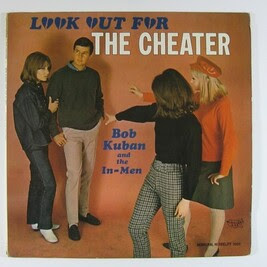
Bob Kuban and the In-men, Our Local Band
The St. Louis area spawned many famous musicians, most
notably Chuck Berry, Ike and Tina Turner and more recently Michael McDonald,
who graduated from McClure High School, in Florissant, Mo. I had already
graduated from McClure before he entered high school, so I'm sorry to say, I didn't know him.
In North St. Louis in the mid '60s the local band that made the big-time was
Bob Kuban and the In-Men. If you've heard of them, you are either familiar with
the Rock and Roll Hall of Fame's one hit wonder list or you’re from the St.
Louis area or you have an incredible amount of rock and roll trivia rambling
around in your brain. I'm guilty of all three.
Bob Kuban was the drummer and band leader of the In-Men. On
Friday nights during the summer, his band would play at Jackson Park, a
relatively small park in Berkeley, a north St. Louis suburb. Jackson Park
hosted a variety of local bands during the hot St. Louis summer nights. In the
summers of 1964 and 1965, my friends and I would go back and forth between
Jackson Park and the local YMCA where there was usually a band playing as well.
But when Bob Kuban and the In-Men were playing at Jackson Park, we tried not to
miss it. It was a first-rate band.
The Beatles and the British bands were taking over America
at that time and they were the major influence on popular music. Bob Kuban's
band was not your typical band of the era. It had more in common with the earlier
rhythm and blues bands of Ike Turner, Wilson Picket and James Brown. In an
interview, Kuban states that Ike Turner was a big influence on him and his
formation of the band. As a footnote, in 1951 before Tina joined him, Ike
Turner's band was called The Kings of Rhythm. They recorded a song called
Rocket 88 which some believe was the very first rock and roll song.
Walter Scott left the band shortly after The Cheater's
popularity to pursue a solo career. He never had another hit song, but in his repertoire,
he sang (Look out for The Cheater) over and over again in a variety of
performance venues. In 1983, when Bob Kuban was trying to get the original band
back together for a reunion concert, he discovered that Walter Scott was
missing. Scott was found 4 years later floating face down in a cistern with his
ankles, knees and wrists bound. He had been shot through the heart from the
back. In one of life's ironic turns, it was discovered that his murderers were
his “cheater” wife and her "cheater" boyfriend. There was a Forensic
Files TV show about it, as well as a book written titled The Cheaters: The
Walter Scott Murder by Scottie Piesmeyer.
I don’t know if Bob Kuban still has his band. He would be in his 80s today. I read that not too long ago, the Bob Kuban Brass played
a summer evening gig at Jackson Park and invited all the fans to come out for
old time's sake. I would have liked to have been there. I live out west and haven't been back to St. Louis since 2002. But I still have memories
of those hot summer evenings in the '60s at Jackson Park, listening to our
local band that made the big-time.
Here's a link to The Cheater
(131) The Cheater (Remastered) - YouTube
The Birth of Motown
Gordy wanted to start his own independent music label and Smokey had the passion and creative talent to help make it happen. So, Gordy made Smokey his vice president and together they formed Motown records. They bought a photographic studio in Detroit and converted the downstairs into a recording studio and business office. Gordy lived upstairs. He called the house, Hitsville USA and that’s exactly what came out of it, hit after hit.
In
1960 they had their first million selling record, Shop Around written by
Smokey and performed by “Smokey (Bill) Robinson and the Miracles”(changed from
Matadors). Between 1961 and 1971, Motown had 110 top ten hits from their all-black artists, which included: the Miracles, the Marvelettes(who had Motown’s
first #1 hit on the pop charts with Please Mr. Postman), the Supremes,
the Four Tops, the Jackson 5, Stevie Wonder, Marvin Gaye, the Temptations, and
Martha and the Vandellas.
Saturday, November 12, 2022
John Sebastian and the Lovin' Spoonful
John Sebastian grew
up in Greenwich Village. His father was a professional concert harmonica player
and his mother, a radio script writer. His godmother was Vivian Vance (Ethel
Mertz on I Love Lucy), a close friend of John’s mother. His family
hosted many musicians at their home, Burl Ives, Woody Guthrie, Lead Belly,
Sonny Terry, and Lightening Hopkins. John got to know them and their music
intimately. I attended a John Sebastian concert in Tucson in the early 2000s.
John said Mississippi John Hurt stayed with his family when he was in New York
and John learned Mississippi’s finger picking style. He confessed and
demonstrated how the Lovin’ Spoonful song “Loving You” was a direct rip off of Hurt’s
musical style.
As part of the folk revival, John was in a group called
the Mugwumps along with Zal Yanovsky, Cass Elliot and Denny Doherty. In 1964,
they put out one album and two singles. When the group broke up, Cass and Denny
joined with John and Michelle Phillips to form the Mammas and Pappas and John
and Zal recruited bass player Steve Boone and drummer Joe Butler to form the
Loving Spoonful. The Mammas and Pappas 1967 hit song, “Creeque Alley”, tells
the story of the formation of the two bands.
After their first hit song, “Do You Believe in Magic”,
the Lovin’ Spoonful had a string of hits with “You Didn’t Have to be So Nice”,
“Day Dream”, “Did You Ever Have to Make Up Your Mind”, “Summer in The City”,
Rain on the Roof”, “Younger Girl” and “Nashville Cats”. They had seven
consecutive top ten hits. John Sebastian was the main song writer and lead
singer. He often played the auto harp on their recordings and was/is an
excellent guitar and harmonica player. Even though the other members of the
group were good musicians, John was the dominant force behind the group.
The band was flying high throughout 1966. Joe Butler was in the Broadway production of “Hair”. The group composed and performed the music for Woody Allen’s film “What’s Up Tiger Lily?”. Sebastian composed the music for Francis Ford Coppola’s second film, “You’re a Big Boy Now” with the band performing all the instrumental background. And they scored another hit song from the film, “Darling be Home Soon.” The producers that created the TV show “The Monkeys” built the show around the Lovin’ Spoonful, but "dropped the band from the project due to conflicts over song publishing rights".
In May of 1967, Zal left the group
after getting busted for marijuana possession. He was a Canadian citizen and
the police pressured him to either give up the name of his drug supplier or be
deported. Zal was afraid he wouldn’t be allowed back into the U.S. so he
complied. After this incident, there was a counter-culture movement to boycott
all of the Lovin’ Spoonful’s records and performances. In an interview Zal said
he left the band because he didn’t like the direction John’s song writing was
taking it. Zal was replaced by Jerry Yester from the Modern Folk Quartet, but
the band was hurt by the drug controversy and only had a few minor hits after
that. In 1968 Sebastian left the group to pursue a solo career. I love his
first solo album titled “John B. Sebastian”.
I attended a benefit concert for fire
fighters at the Tacoma Dome in the 90’s. The bands included America and the Lovin’
Spoonful. America sounded great, with the two remaining members. The Lovin’
Spoonful consisted of Boone, Butler, Jerry Yester and his brother Jim. Joe
Butler sang all of John’s leads. The music sounded the same, but Butler was no
substitute for Sebastian on the lead vocals. In 2000, the original band got
back together for their induction into the Rock & Roll Hall of Fame.
In the summer of 1969, Sebastian
performed at Woodstock and some of it is captured in the “Woodstock” movie. In
an interview John said he was not scheduled to perform. He had hitched a ride
on a helicopter and attended the festival as a fan and to support his musician
friends. He didn’t even bring a guitar with him. After a fairly long bout of
rain, the crew needed to sweep down the stage to make it safe for the
electronic equipment. They needed someone who could fill in with just an
acoustic guitar, so John borrowed a guitar from his friend and fellow folk
singer, Tim Hardin, and performed a totally improvised acoustic set.
In talking about the performance, he
said it was a magical moment for him. He was wearing a self-tie-dyed outfit and
pretty high on pot. In the middle of the set, the clouds parted and the sun
came out. His solo career got a big boost from that performance. John had his
biggest solo hit, “Welcome Back” in 1976, the theme song to the television show
“Welcome Back Cotter”.
When we saw him perform in Seattle,
John still had his voice and put on a great show in the small club. I was
determined to speak to him. During the break he went to the bathroom and I
followed him. I didn’t want to be creepy, so I waited outside the door. When he
came out, I said, “John, thank you for your music.” He said, “You’re welcome.”
And that was the extent of it. He got back on stage and finished the show. When
we saw him in Tucson years later, he had all but lost his voice. He still put
on a good show, but his croaky voice did not work well singing the old
“Spoonful” songs but sounded appropriate for the early folk and blues songs.
The Lovin’ Spoonful was truly an
authentic American band that pioneered a genre of rock & roll that is still
popular to this day.
Wednesday, June 1, 2022
The "Girl Groups"
I was in middle school when early rock & roll all
but died out and “girl groups” began appearing over the radio airwaves. These
groups sprung out of the male dominated Doo-Wop era of the forties and fifties.
The “girl group” phenomenon lasted from about 1957 to 1966.The early groups
were mostly teenagers who sang together in school and church. “Mr. Lee”, by the
Bobbettes was the first song to make the pop charts. These five teenage
girls from East Harlem, originally called themselves the Harlem Queens.
They grew up in the projects and like the Doo-Wop groups before them, practiced
in the hallways and on the playground.
“Maybe”, by the Chantels, was the next song to
become a hit. It was a million seller in 1957 and re-released in 1969 after
Janis Joplin covered it. The Chantels were five high school girls, ages
14 to 17, who attended parochial school in the Bronx and sang together in the
school choir.
My favorite “girl group”, and the act that solidified the “girl group” sound was the Shirelles, four teenagers from Passaic, New Jersey. They began singing together at high school shows and parties, initially calling themselves the Poquellos. They had a sweetness and innocence to their sound, with back-ground harmonies like the earlier Doo-Wop groups. Their first single “I Met Him on a Sunday” was a song they wrote themselves and sang at school parties. Their second single, “Dedicated to the One I Love”, was a cover of a 1957 “5 Royals” song. The Shirelles version was released in 1959, but without a national distributer, only charted at #83 on the Billboard Top 100. In 1961, after they had several hits, the song was re-released and shot to #3. In 1967, the Mamas and the Papas covered the song "Dedicated to the one I Love" which went to #2. This was the first song that Michelle Phillips sang lead on instead of Cass Elliot.
“Tonight’s the Night”, the Shirelles next hit
single, was co-written by lead singer Shirley Owens. “Will You Love MeTomorrow” written by Carole King and her then husband Jerry Goffin was their first
#1 song and the first #1 by any “girl group”. Both of these songs would later make Rolling
Stone magazine’s list of the greatest hits of all time. “Mama Said” reached #4
and in early 1962 “Baby It’s You” (co-written by Burt Bacharach, Hal David and
Barney Williams) went to #8, It was recorded by the Beatles and put on
their first album “Please Please Me” along with another Shirelles’ song,
“Boys”, sung by Ringo. In 1969, a group called Smith had the biggest hit
with “Baby It’s You”, but I favor the Shirelles’ version. The Shirelles
second #1 hit, and their biggest selling single was “Soldier Boy”. Even though
they continued to record new material until the late sixties, the Shirelles’
last hit single was “Foolish Little Girl” in 1963, charting at # 4.
Following in the wake of the Shirelles, came a
host of other “girl groups” and 1963 was their most successful year. The Chiffons
had hits with, “He’s So Fine” and “One Fine Day”(another Carole King/Jerry
Goffin song), The Ronnettes (Phil
Spector’s Group) with “Be My Baby”, Martha and The Vandellas (a Motown act) had two
hits, “Heatwave” and “Come and Get These Memories”, the Chrystals with “DaDoo Run Run”, and the Angels had a hit with “My Boyfriend’s Back”.
The most popular “girl group” was the Supremes (another Motown act). In 1964 they had two hits, “Where did Our Love Go,” and “Baby Love”.
They went on to have 12 number one hits and for a time rivaled the Beatles
popularity.
But in 1964, after the Beatles came to America,
popular music became dominated by British groups, pushing out and replacing
many musical styles, including almost all of the “girl groups”.