1955

1965

1968

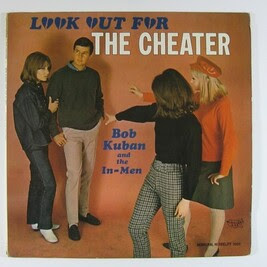
The St. Louis area spawned many famous musicians, most
notably Chuck Berry, Ike and Tina Turner and more recently Michael McDonald,
who graduated from McClure High School, in Florissant, Mo. I had already
graduated from McClure before he entered high school, so I'm sorry to say, I didn't know him.
In North St. Louis in the mid '60s the local band that made the big-time was
Bob Kuban and the In-Men. If you've heard of them, you are either familiar with
the Rock and Roll Hall of Fame's one hit wonder list or you’re from the St.
Louis area or you have an incredible amount of rock and roll trivia rambling
around in your brain. I'm guilty of all three.
Bob Kuban was the drummer and band leader of the In-Men. On
Friday nights during the summer, his band would play at Jackson Park, a
relatively small park in Berkeley, a north St. Louis suburb. Jackson Park
hosted a variety of local bands during the hot St. Louis summer nights. In the
summers of 1964 and 1965, my friends and I would go back and forth between
Jackson Park and the local YMCA where there was usually a band playing as well.
But when Bob Kuban and the In-Men were playing at Jackson Park, we tried not to
miss it. It was a first-rate band.
The Beatles and the British bands were taking over America
at that time and they were the major influence on popular music. Bob Kuban's
band was not your typical band of the era. It had more in common with the earlier
rhythm and blues bands of Ike Turner, Wilson Picket and James Brown. In an
interview, Kuban states that Ike Turner was a big influence on him and his
formation of the band. As a footnote, in 1951 before Tina joined him, Ike
Turner's band was called The Kings of Rhythm. They recorded a song called
Rocket 88 which some believe was the very first rock and roll song.

Walter Scott left the band shortly after The Cheater's
popularity to pursue a solo career. He never had another hit song, but in his repertoire,
he sang (Look out for The Cheater) over and over again in a variety of
performance venues. In 1983, when Bob Kuban was trying to get the original band
back together for a reunion concert, he discovered that Walter Scott was
missing. Scott was found 4 years later floating face down in a cistern with his
ankles, knees and wrists bound. He had been shot through the heart from the
back. In one of life's ironic turns, it was discovered that his murderers were
his “cheater” wife and her "cheater" boyfriend. There was a Forensic
Files TV show about it, as well as a book written titled The Cheaters: The
Walter Scott Murder by Scottie Piesmeyer.
I don’t know if Bob Kuban still has his band. He would be in his 80s today. I read that not too long ago, the Bob Kuban Brass played
a summer evening gig at Jackson Park and invited all the fans to come out for
old time's sake. I would have liked to have been there. I live out west and haven't been back to St. Louis since 2002. But I still have memories
of those hot summer evenings in the '60s at Jackson Park, listening to our
local band that made the big-time.
Here's a link to The Cheater
(131) The Cheater (Remastered) - YouTube

Gordy wanted to start his own independent music label and Smokey had the passion and creative talent to help make it happen. So, Gordy made Smokey his vice president and together they formed Motown records. They bought a photographic studio in Detroit and converted the downstairs into a recording studio and business office. Gordy lived upstairs. He called the house, Hitsville USA and that’s exactly what came out of it, hit after hit.
In
1960 they had their first million selling record, Shop Around written by
Smokey and performed by “Smokey (Bill) Robinson and the Miracles”(changed from
Matadors). Between 1961 and 1971, Motown had 110 top ten hits from their all-black artists, which included: the Miracles, the Marvelettes(who had Motown’s
first #1 hit on the pop charts with Please Mr. Postman), the Supremes,
the Four Tops, the Jackson 5, Stevie Wonder, Marvin Gaye, the Temptations, and
Martha and the Vandellas.
 |
| View from our patio |
Katie and I moved back to Arizona, but this time as
snowbirds, splitting our time between Washington and Green Valley. We were in
our sixties when we lived here before and the folks of the WWII Generation were
the elders in this community of people 55 years and up. The youngest of that
generation would now be 97 years old, so there are not many left, and those who
are, don’t get out a lot. The Silent Generation, those people born between 1928
and 1945, was the dominant group, while Baby Boomers, born from 1946 to 1964,
were the youngsters.
Now Boomers are the dominant group, the youngest is 59 and
the oldest 77. The evidence of this Boomer take-over is everywhere. Walking the
desert trails, I’m occasionally flashed the two-finger peace sign by another walker.
It always takes me by surprise and I usually just give a normal wave. Many men
still display their “freak flags”, with tiny thin pony tails or facial hair.
The other day, I was standing in line at the grocery store and the elderly
woman in front of me had long straight white hair and was wearing a colorful
skirt down to her ankles. She reeked of patchouli oil, which transported me mentally
back to the Oregon Country Fair in the 70s, where the dominant smells were
patchouli and cannabis. We’ve attended three different music venues since we’ve
been here and all the music was 50s and early 60s rock & roll.
The youngest Boomers have more in common with Gen-Xers. They
were too young to remember Watergate and when the boys came of military age,
the draft had already ended, so, unless they lost a loved one, the Vietnam War had
little impact on their lives. The oldest Gen-Xer would be 58 and they are
beginning to show up here as well. I see them holding hands, walking with a
spring in their step, newly retired, hopeful, bright-eyed and bushytailed.
The Silent Generation(SG), also referred to as
Traditionalists, are the elders now. They were children during the Great Depression
and the end of WWII. Couples during this time were not having a lot of babies,
so they are a comparatively small generation. As children they were strictly managed by
their parents (seen but not heard) as opposed to the later more promiscuous Boomers
and Gen-X children. Radio was their dominant form of entertainment. Women
entered the workforce in record numbers and unions became strong and dominant
in the work place. SGs inherited the values of their parents-- conformity, hard
work, religiosity and early marriage. But times were changing and for the first
time in American history, divorce became legal and more culturally accepted, so
this generation has the highest divorce rate in US history. Communism was on
the rise in the world and Joseph McCarthy attempted to root out communist
leaning individuals in all walks of life. SGs made up the majority of soldiers
in the Korean War. Because of these national events, this generation is
described as being conservative and cautious.
And yet, this cautious and conservative generation had a
rebellious undercurrent that erupted in the 1950s. In the 1953 movie “The Wild One”, Marlon
Brando’s character, the biker gang leader, was asked by another character, “Hey
Johnny, what are you rebelling against?”, and he replied “What have you got?”. The
1955 movie “Rebel Without a Cause”, starring James Dean, captured the
alienation, angst and confusion felt by teenage SGs. From this generation sprung
the civil rights movement, which later morphed into the 60s peace movement and protests
against the Vietnam War. Martin Luther King and John Lewis were SGs. The Beatniks
were a 50s phenomenon, a counter-culture movement whose expression was seen in
literature, art and music. They laid the foundation for the Hippies of the 60s.
The “Beat Generation” or “Beatniks” were anti-establishment
and anti-materialism. Their music was jazz by musicians like Charlie Parker,
Dizzy Gillespie and Miles Davis and their writers were Jack Kerouac, Allen
Ginsberg, William Burroughs and Gary Snyder among others. They embraced eastern
philosophy and adopted the lifestyle of the “Lost Generation” writers and
French existentialists of the 20s. Some dressed in black tight outfits, horned
rimmed glasses and berets and they gathered in coffee houses and listened to
poetry readings or acoustic music with accompanying bongos. My introduction to Beatniks as a child was the
Maynard G. Krebs character on the TV show “The Many Lives of Dobie Gillis”,
played by Bob Denver. Later I read Kerouac’s book “On the Road”. In Greenwich
Village, the coffee house scene transformed in the early 60s into the folk
revival movement of Silent Generation musicians like Bob Dylan, Joan Baez, Judy
Collins, Phil Ochs, Tom Paxton, Eric Andersen, Tom Rush, Tim Harden, and
Leonard Cohen as well as John Sebastian(The Lovin Spoonful), Roger Mcguinn(The
Byrds) and Cass Elliot(Mamas and the Papas).
Ken Kesey, an SG, was a direct bridge
between the Beatniks and the Hippies. In 1964, he and the Merry Pranksters
drove a psychedelically painted 1939 International Harvester school bus they
named “Further”, across the country, smoking marijuana and dropping LSD. They
stopped in small towns and visited with (or more like intimidated) the locals
along the way. Neal Cassady, who Kerouac’s side kick character was based on in
“On the Road”, was one of the Merry Pranksters. The “trip” was immortalized in
Tom Wolf’s book “The Electric Cool-aid Acid Test”.
All the early rock & rollers were from the Silent
Generation, Chuck Berry, Jerry Lee Lewis, Little Richard, Carl Perkins, the
Everly Brothers, Buddy Holly, Bo Diddley, Ricky Nelson. All are dead now. Don
Everly just died in 2021.
I was surprised to learn that even the second wave of rock
& roll in the 60s was launched by a bunch of Silent Generation artists--the
Beatles, the Rolling Stones, Jimi Hendrix, Janis Joplin, Jim Morrison, Crosby,
Stills, Nash & Young, Jerry Garcia, Surf Music inventor Dick Dale, as well
as the Beach Boys(except the youngest of the Wilson brothers Carl was a Boomer)
and Jan and Dean.
Even though rock & roll was invented and carried on by
individuals of the Silent Generation, it was the Boomers who made up the
majority of the audience and claimed the music as their own. By the time of the
British invasion in 1964, most of the SGs were married and working at their
jobs, too busy to pay much attention to the music. But the hordes of Boomers
just coming of age, latched on to the music and it became the sound track of
our lives.

John Sebastian grew
up in Greenwich Village. His father was a professional concert harmonica player
and his mother, a radio script writer. His godmother was Vivian Vance (Ethel
Mertz on I Love Lucy), a close friend of John’s mother. His family
hosted many musicians at their home, Burl Ives, Woody Guthrie, Lead Belly,
Sonny Terry, and Lightening Hopkins. John got to know them and their music
intimately. I attended a John Sebastian concert in Tucson in the early 2000s.
John said Mississippi John Hurt stayed with his family when he was in New York
and John learned Mississippi’s finger picking style. He confessed and
demonstrated how the Lovin’ Spoonful song “Loving You” was a direct rip off of Hurt’s
musical style.
As part of the folk revival, John was in a group called
the Mugwumps along with Zal Yanovsky, Cass Elliot and Denny Doherty. In 1964,
they put out one album and two singles. When the group broke up, Cass and Denny
joined with John and Michelle Phillips to form the Mammas and Pappas and John
and Zal recruited bass player Steve Boone and drummer Joe Butler to form the
Loving Spoonful. The Mammas and Pappas 1967 hit song, “Creeque Alley”, tells
the story of the formation of the two bands.
After their first hit song, “Do You Believe in Magic”,
the Lovin’ Spoonful had a string of hits with “You Didn’t Have to be So Nice”,
“Day Dream”, “Did You Ever Have to Make Up Your Mind”, “Summer in The City”,
Rain on the Roof”, “Younger Girl” and “Nashville Cats”. They had seven
consecutive top ten hits. John Sebastian was the main song writer and lead
singer. He often played the auto harp on their recordings and was/is an
excellent guitar and harmonica player. Even though the other members of the
group were good musicians, John was the dominant force behind the group.
The band was flying high throughout 1966. Joe Butler was in the Broadway production of “Hair”. The group composed and performed the music for Woody Allen’s film “What’s Up Tiger Lily?”. Sebastian composed the music for Francis Ford Coppola’s second film, “You’re a Big Boy Now” with the band performing all the instrumental background. And they scored another hit song from the film, “Darling be Home Soon.” The producers that created the TV show “The Monkeys” built the show around the Lovin’ Spoonful, but "dropped the band from the project due to conflicts over song publishing rights".
In May of 1967, Zal left the group
after getting busted for marijuana possession. He was a Canadian citizen and
the police pressured him to either give up the name of his drug supplier or be
deported. Zal was afraid he wouldn’t be allowed back into the U.S. so he
complied. After this incident, there was a counter-culture movement to boycott
all of the Lovin’ Spoonful’s records and performances. In an interview Zal said
he left the band because he didn’t like the direction John’s song writing was
taking it. Zal was replaced by Jerry Yester from the Modern Folk Quartet, but
the band was hurt by the drug controversy and only had a few minor hits after
that. In 1968 Sebastian left the group to pursue a solo career. I love his
first solo album titled “John B. Sebastian”.
I attended a benefit concert for fire
fighters at the Tacoma Dome in the 90’s. The bands included America and the Lovin’
Spoonful. America sounded great, with the two remaining members. The Lovin’
Spoonful consisted of Boone, Butler, Jerry Yester and his brother Jim. Joe
Butler sang all of John’s leads. The music sounded the same, but Butler was no
substitute for Sebastian on the lead vocals. In 2000, the original band got
back together for their induction into the Rock & Roll Hall of Fame.
In the summer of 1969, Sebastian
performed at Woodstock and some of it is captured in the “Woodstock” movie. In
an interview John said he was not scheduled to perform. He had hitched a ride
on a helicopter and attended the festival as a fan and to support his musician
friends. He didn’t even bring a guitar with him. After a fairly long bout of
rain, the crew needed to sweep down the stage to make it safe for the
electronic equipment. They needed someone who could fill in with just an
acoustic guitar, so John borrowed a guitar from his friend and fellow folk
singer, Tim Hardin, and performed a totally improvised acoustic set.

In talking about the performance, he
said it was a magical moment for him. He was wearing a self-tie-dyed outfit and
pretty high on pot. In the middle of the set, the clouds parted and the sun
came out. His solo career got a big boost from that performance. John had his
biggest solo hit, “Welcome Back” in 1976, the theme song to the television show
“Welcome Back Cotter”.
When we saw him perform in Seattle,
John still had his voice and put on a great show in the small club. I was
determined to speak to him. During the break he went to the bathroom and I
followed him. I didn’t want to be creepy, so I waited outside the door. When he
came out, I said, “John, thank you for your music.” He said, “You’re welcome.”
And that was the extent of it. He got back on stage and finished the show. When
we saw him in Tucson years later, he had all but lost his voice. He still put
on a good show, but his croaky voice did not work well singing the old
“Spoonful” songs but sounded appropriate for the early folk and blues songs.
The Lovin’ Spoonful was truly an
authentic American band that pioneered a genre of rock & roll that is still
popular to this day.
I was in middle school when early rock & roll all
but died out and “girl groups” began appearing over the radio airwaves. These
groups sprung out of the male dominated Doo-Wop era of the forties and fifties.
The “girl group” phenomenon lasted from about 1957 to 1966.The early groups
were mostly teenagers who sang together in school and church. “Mr. Lee”, by the
Bobbettes was the first song to make the pop charts. These five teenage
girls from East Harlem, originally called themselves the Harlem Queens.
They grew up in the projects and like the Doo-Wop groups before them, practiced
in the hallways and on the playground.
“Maybe”, by the Chantels, was the next song to
become a hit. It was a million seller in 1957 and re-released in 1969 after
Janis Joplin covered it. The Chantels were five high school girls, ages
14 to 17, who attended parochial school in the Bronx and sang together in the
school choir.

“Tonight’s the Night”, the Shirelles next hit
single, was co-written by lead singer Shirley Owens. “Will You Love MeTomorrow” written by Carole King and her then husband Jerry Goffin was their first
#1 song and the first #1 by any “girl group”. Both of these songs would later make Rolling
Stone magazine’s list of the greatest hits of all time. “Mama Said” reached #4
and in early 1962 “Baby It’s You” (co-written by Burt Bacharach, Hal David and
Barney Williams) went to #8, It was recorded by the Beatles and put on
their first album “Please Please Me” along with another Shirelles’ song,
“Boys”, sung by Ringo. In 1969, a group called Smith had the biggest hit
with “Baby It’s You”, but I favor the Shirelles’ version. The Shirelles
second #1 hit, and their biggest selling single was “Soldier Boy”. Even though
they continued to record new material until the late sixties, the Shirelles’
last hit single was “Foolish Little Girl” in 1963, charting at # 4.
Following in the wake of the Shirelles, came a
host of other “girl groups” and 1963 was their most successful year. The Chiffons
had hits with, “He’s So Fine” and “One Fine Day”(another Carole King/Jerry
Goffin song), The Ronnettes (Phil
Spector’s Group) with “Be My Baby”, Martha and The Vandellas (a Motown act) had two
hits, “Heatwave” and “Come and Get These Memories”, the Chrystals with “DaDoo Run Run”, and the Angels had a hit with “My Boyfriend’s Back”.
The most popular “girl group” was the Supremes (another Motown act). In 1964 they had two hits, “Where did Our Love Go,” and “Baby Love”.
They went on to have 12 number one hits and for a time rivaled the Beatles
popularity.
But in 1964, after the Beatles came to America,
popular music became dominated by British groups, pushing out and replacing
many musical styles, including almost all of the “girl groups”.
When I was
in high school in Ferguson, Missouri in the early sixties, I dreamed of traveling
to California and living the lifestyle of a surfer. The southern California mystique was in the
minds and hearts of many young people at the time. Rock & roll had nearly
died in the early sixties. The hard-edged originality of early rockers, like
Elvis, Jerry Lee Lewis, Buddy Holly, Chuck Berry and Little Richard was gone
and the airwaves were filled with clean cut white singers; (lots of Bobbys--Vinton,
Vee, Rydel) and Fabian, Shelly Fabre, Connie Francis etc. Most sang well, but it
was mainly sanitized pop music. Two major styles of music sprung out of the void,
Motown and Surf Music.
Surf Rock is
a southern California phenomenon integral to the surf culture of the early
sixties, originating mainly in Orange County. Dick Dale is credited as the
creator and pioneer. His family moved to
Orange County when he was a seventeen-year-old senior in high school. Dick
began surfing and wanted to play music that represented his experience. He was
influenced by the instrumental rock music of Duane Eddy, Link Wray and The
Venturers. He played a Fender Stratocaster electric guitar and worked with Leo
Fender to invent an amplifier that could increase the sound and get a reverb
effect that emulated the sound of the waves. This reverb, called the “wet sound”,
was built into the fenders amps. He also
made use of the vibrato arm of the guitar to bend the notes and he added
tremolo picking, rapid picking that became the signature sound of surf bands.

Dick Dale and the Deltones song Let’s Go Trippin’ is thought to be the
first Surf Rock song. The group introduced it in 1960 at a dance concert at the
Rendezvous Ballroom in Newport Beach on the Balboa peninsula. These concerts
became known as “Stomps” because the surfers who attended would stomp on the
floor in time with the music causing the old dance hall to shake. The dance,
“the surfer’s stomp” was born from this.
The Beach Boys were by far the most
popular surf rock band, even though the surfers at the time would not have
considered them to be authentic. Surf music was exclusively instrumental until
Brian Wilson and The Beach Boys borrowed the basic sound and added the rich
harmonies of the late fifties college circuit groups like the Four Freshman and
the Hi-Los. In 1961 the Beach Boys came
out with Surfin’, but probably the
first surfing song I heard in Missouri was Surfin’
Sufari, followed by Surfin’ USA
and Surfer Girl.
Surf music
splintered into two genres, instrumental surf rock and vocal surf pop. By 1963
both types of surf music were getting airplay across the country with hits
like, Pipeline by the Chantays, Wipeout by the Safaris, and Surf City (co-written by Brian
Wilson) by Jan & Dean. Many non-surfing musical groups jumped on the
bandwagon and surf music began to fill the airwaves.
During those
long, cold winter months in Missouri, intoxicating waves of surf music entered my
ears and washed over my brain. I could only dream of the surfing scene of
southern California, but it was a dream that enlightened my imagination and
warmed my soul.


